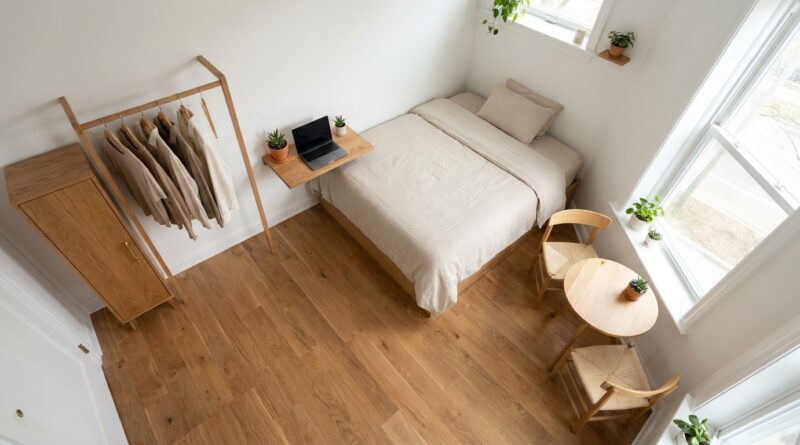
The 5-Pillar Capsule Home: A Minimalist Way To Turn One Tiny Apartment Into A Calm Productivity Engine
Your apartment is not just where you live. It is also where your brain gets interrupted 50 times a day. The laundry basket says one thing, the unread mail says another, your phone charger is missing again, and somehow the kitchen counter has turned into a storage locker for random life admin. That kind of visual noise is exhausting. It is not because you are lazy or bad at organizing. It is because a small space has no room to hide bad systems. If every surface has a job, every object also has a vote. The good news is you do not need a renovation, a wall of bins, or another smart gadget to fix it. A Capsule Home is a simpler idea. You shrink your home down to five clear pillars, then make each one support how you want to live. That is the heart of minimalist productivity in a small apartment, and you can feel the difference fast.
⚡ In a Hurry? Key Takeaways
- A Capsule Home means giving your small apartment five clear functions so your space stops competing for your attention.
- Start with one reset today: clear one surface completely and assign it a single purpose, like work, meals, or entry drop zone.
- This is low cost and low stress. You do not need custom furniture or a new app. You need fewer decisions and better defaults.
What Is a 5-Pillar Capsule Home?
Think of it like a capsule wardrobe, but for your apartment. Instead of stuffing your home with tools, storage hacks, and furniture for every possible scenario, you keep only what supports your real daily life.
The five pillars are simple:
1. Rest
Your sleep area should help you power down, not remind you of unfinished tasks.
2. Work
You need one place, even if it is tiny, that tells your brain it is time to focus.
3. Reset
This is where cleaning, laundry, trash, and quick tidying live. It keeps mess from spreading.
4. Nourish
Your food zone should make basic meals and hydration easy, not buried under clutter.
5. Flow
This covers movement through the apartment. Entryways, walkways, and frequently used surfaces should be easy to use without friction.
That is it. Not twenty categories. Not a color-coded command center. Just five pillars that cover real life.
Why Small Apartments Feel So Mentally Loud
In a larger home, clutter can hide behind doors. In a small apartment, it sits in plain sight and keeps poking at you. A stack of returns by the door becomes a daily guilt reminder. A chair full of clothes becomes a visual to-do list. A kitchen counter full of gadgets makes cooking feel like a project before you even start.
This is why minimalist productivity in a small apartment matters so much. Productivity is not only about calendars and apps. It is also about whether your room helps you begin.
If your home keeps dragging your attention sideways, it may help to read The 5‑Pillar Minimalist Home Focus System: A Simple Way To Make Your Space Work Like A Second Brain. The core idea is refreshingly practical. Your environment can either support your memory and focus, or keep draining both.
How to Build a Capsule Home in 24 Hours
You do not have to do everything at once. But you can make your apartment feel lighter in a single day if you go in the right order.
Step 1: Remove the obvious extras
Start with visible duplicates and low-value clutter. Extra mugs. Dead chargers. Decorative storage boxes holding junk you forgot about. Piles of paper. Broken things waiting for “someday.”
Do not overthink it. In a small apartment, the first win is breathing room.
Step 2: Give each surface one job
This is huge. A table that is part desk, part mail center, part snack shelf, part laundry catcher will never feel calm.
Assign one purpose to each key surface:
- Desk for work only
- Nightstand for sleep-related items only
- Kitchen counter for meal prep only
- Entry shelf for keys, wallet, and bag only
Once a surface has a job, random items stand out faster. That makes tidying easier.
Step 3: Build the five pillars
Walk through your apartment and ask one question in each area: does this help the pillar, distract from it, or belong somewhere else?
For example:
- If your bed area is full of cords, paperwork, and unopened packages, Rest is being crowded out.
- If your desk shares space with makeup, dishes, and shopping bags, Work is weak.
- If your cleaning supplies are scattered in three places, Reset takes more energy than it should.
Step 4: Make the right things easier than the wrong things
This is the trick most people miss. Your apartment should have good defaults.
Examples:
- Put a small trash can where clutter usually gathers.
- Keep a laundry hamper where clothes actually come off.
- Store your work charger at your desk, not in a general cable drawer.
- Keep a water bottle or glass near the place you usually work.
If the good habit takes fewer steps, you will actually do it.
Step 5: Create one nightly reset
You do not need an hour-long shutdown routine. Try a 10-minute one:
- Clear the main surface
- Put tomorrow’s essentials by the door
- Plug in key devices
- Return dishes to the sink or dishwasher
- Make the bed area feel quiet again
That small reset pays you back the next morning.
The 5 Pillars in Real Life
Rest: protect the sleep signal
If your bed is also your office, dining table, and scrolling lounge, your brain never gets a clear off switch. Even in a studio, you can create a sleep signal with small moves. Keep the bedding simple. Remove visible work items at night. Use one lamp or one tray that only appears during wind-down time.
Work: make starting friction-free
Most people do not need a dream office. They need a place where starting takes 10 seconds, not 10 minutes. Keep your basic tools ready. One charger. One notebook. One pen that works. One chair that is comfortable enough. That is often enough to turn avoidance into action.
Reset: stop mess at the source
The best reset systems are boring, and that is a compliment. If you need a complicated storage plan to put away socks or wipe a counter, the system is too fancy. Put cleaning cloths where spills happen. Keep a basket for incoming paper. Make laundry sorting simple or skip sorting entirely if that works for you.
Nourish: reduce food friction
When the kitchen is packed with rarely used gadgets, cooking gets harder, not easier. Keep the tools you actually use every week. Clear enough space to make one decent meal without first moving six things. In many small apartments, a clean counter is more valuable than another appliance.
Flow: protect movement and attention
Flow is easy to ignore until you trip over it. Shoes by the door. Bags on dining chairs. Boxes in walkways. These are small annoyances that quietly tax your focus. Clear the path you use most often. Your future self will feel the difference every day.
What Not to Buy
This is where many people get stuck. They feel overwhelmed, so they buy containers, shelves, labels, and smart home gadgets. Sometimes those help. Often they just make clutter look more organized while keeping the same mental load.
Try this rule first: do not buy storage until you have removed the excess and assigned the five pillars.
Otherwise, you may just be building parking spaces for indecision.
Signs Your Capsule Home Is Working
You are looking for calmer function, not magazine perfection.
- You can start work without clearing a pile first.
- You spend less time hunting for daily essentials.
- Your bed feels like a place to rest, not a reminder board.
- Your counters stay clearer with less effort.
- Your apartment feels easier to maintain, even on busy days.
That is real progress. It means your home is finally helping instead of heckling.
At a Glance: Comparison
| Feature/Aspect | Details | Verdict |
|---|---|---|
| Traditional organizing | Often adds bins, shelves, and categories without reducing decisions or visual noise. | Helpful only after you simplify first. |
| Capsule Home method | Builds around five core functions: Rest, Work, Reset, Nourish, and Flow. | Best for minimalist productivity in a small apartment. |
| Smart gadget fix | Can automate one task, but usually does not solve clutter, bad placement, or overloaded surfaces. | Nice extra, not the foundation. |
Conclusion
Most people do not need a bigger home to feel better. They need a home with fewer competing signals. Right now people are more efficient and more connected than ever, but less at peace and more worn down by decision fatigue at home. A Capsule Home gives you a concrete, low-cost way to shrink your environment to just what actually moves your life forward. No full renovation. No new tech stack. No system so fussy that it collapses in a week. Just five clear pillars, better defaults, and a lighter feeling you can start building within 24 hours. In a small apartment, that kind of calm is not a luxury. It is a tool.