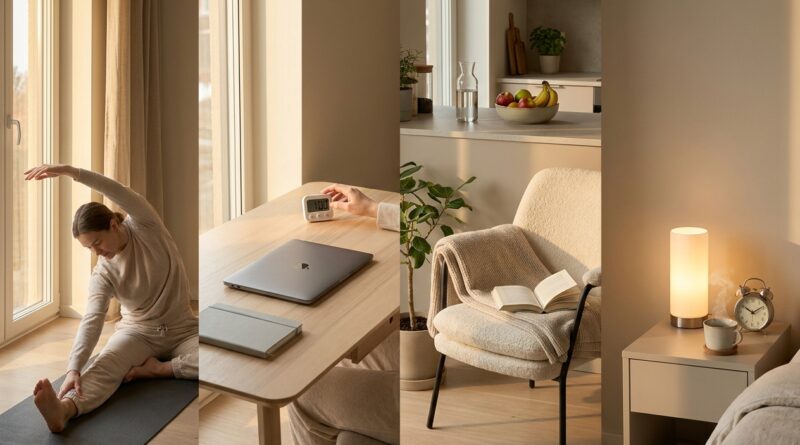
The 5-Pillar Micro-Routine Life: A Minimalist Way To Feel In Control Without A Rigid Schedule
You are not lazy. You are probably just tired of routines that ask you to live like a robot. A perfect schedule looks lovely on Sunday night, then real life shows up. A late start. A needy inbox. A child, a commute, a bad night’s sleep, a brain that simply says no. By Wednesday, the whole thing can feel broken, and somehow you end up blaming yourself instead of the routine. That is why minimalist micro routines for productivity are catching on. They work with messy days instead of pretending messy days do not exist. The idea is simple. Stop trying to control every hour. Start using a few tiny anchors that help you feel steady, focused and a little more like yourself. This 5-pillar micro-routine life is not about becoming a different person. It is about giving your day a bit of structure without building a cage around it.
⚡ In a Hurry? Key Takeaways
- A 5-pillar micro-routine gives you control through tiny repeatable habits, not a rigid hourly schedule.
- Start with one action in each pillar that takes one to five minutes and attach it to moments you already have.
- If you miss a pillar, nothing is ruined. The goal is consistency over time, not perfection in one day.
Why strict routines keep falling apart
Most routines fail for a boring reason. They ask too much, too soon, too often.
A rigid plan usually depends on ideal conditions. You wake up on time. You have energy. Nobody interrupts you. Your mood cooperates. Your calendar stays clean. That is not real life. That is a showroom version of life.
When the routine breaks, it does not just waste time. It chips away at self-trust. You start thinking, “I can never stick to anything.” That story hurts more than the missed workout or skipped journal page.
Micro-routines are different. They are not built to impress anyone. They are built to survive Tuesday.
What the 5-pillar micro-routine life actually is
Think of it as five small supports for your day. Not a full blueprint. Not a color-coded system. Just five places where a tiny action can help you feel more in control.
The pillars are:
- Body. A small action that helps your physical state.
- Mind. A quick action that clears mental clutter.
- Focus. A simple cue for what matters most today.
- Space. A fast reset of the area around you.
- Connection. A small human touchpoint, including connection with yourself.
That is it. You do not need to do all five before 8 a.m. You do not even need to do them in order. The point is to have five tiny levers you can pull when the day starts to drift.
The five pillars, made practical
1. Body: steady your energy first
Your brain feels less dramatic when your body gets basic care. This pillar is not about becoming a fitness influencer. It is about reducing drag.
Pick one micro-action:
- Drink a full glass of water after waking up
- Do 10 squats while the kettle boils
- Take a two-minute walk outside
- Eat something with protein before the caffeine spiral begins
If you want minimalist micro routines for productivity, body-based habits matter more than people admit. Tired, thirsty, stiff humans do not focus well. No app can fix that.
2. Mind: clear one layer of noise
This pillar is for mental static. The looping thoughts. The “I have too much to do” feeling. You are not trying to become deeply serene in three minutes. You are just lowering the volume.
Try one:
- Write down three things on your mind
- Take five slow breaths before opening messages
- Spend two minutes sitting in silence
- Write one sentence: “What is making today feel heavy?”
This small pause often stops the day from running you over before it has even started.
3. Focus: decide what “done” means today
This is the pillar most people skip, then wonder why they felt busy but got nowhere.
You do not need a huge task manager. You need one clear target.
Try this:
- Choose one “must move” task for the day
- Set a 15-minute timer to start it
- Write today’s top priority on a sticky note
- Ask, “If only one thing goes right today, what should it be?”
Notice the wording. Not “finish your whole life.” Just move the one thing that matters.
4. Space: reset your environment in plain sight
Mess is not a moral failure. But visual clutter does create friction. A chaotic space keeps reminding your brain of unfinished business.
This pillar should be almost laughably small:
- Clear your desk for two minutes
- Wash the mug and the plate, not every dish in the house
- Put away five items
- Close tabs you are not using
Small environmental resets have a sneaky effect. They make the next good choice easier.
5. Connection: stop trying to self-manage in a vacuum
Feeling in control is not only about output. It is also about feeling grounded. Humans do better with some form of connection.
This could look like:
- Text one person back
- Say good morning without multitasking
- Write one kind sentence to yourself in your notes app
- Take one minute to ask, “What do I need right now?”
If your life feels scattered, this pillar helps stop the emotional isolation that often comes with trying to “get it together.”
How to build your version without making it complicated
The biggest mistake is turning a micro-routine into a secret full routine.
Keep each pillar tiny. One action. One cue. One minute if needed.
Use anchors, not times
Strict schedules break when timing breaks. Anchors hold up better.
Instead of saying:
- “At 7:00 I will journal”
say:
- “After I make coffee, I will write three lines”
Instead of:
- “At 2:00 I will reset my workspace”
say:
- “After lunch, I will clear my desk for two minutes”
Anchors fit real life better because they connect to events that already happen.
Keep the floor low
Your routine should still count on a hard day.
That means the “minimum version” must be easy enough to do when you are busy, grumpy or tired. If your body pillar is a 45-minute workout, that is not a micro-routine. That is a second job.
Track proof, not perfection
Do not ask, “Did I do all five every day?” Ask, “Which pillars helped this week?”
You are collecting evidence that you can return to yourself quickly. That matters more than streaks.
What a day can look like with the 5-pillar approach
Here is a realistic example.
Morning
Body: Drink water.
Mind: Three deep breaths before checking your phone.
Focus: Pick one must-do task.
Midday
Space: Clear the desk for two minutes.
Connection: Send the text you have been putting off.
Later, when the day gets messy
Repeat one pillar instead of giving up on the day.
That last part matters. Micro-routines are not only for calm mornings. They are rescue tools for messy afternoons too. If you like the idea of a midday save, The 5‑Pillar Daily Reset Loop: A Minimalist Way To Stop Your Day From Quietly Falling Apart is a useful companion read. It speaks to that exact moment when your brain has wandered off and the day starts slipping through your fingers.
Common mistakes that make simple systems feel harder than they are
Making every pillar “aspirational”
If every action sounds like your best self on a very good day, it will not last. Make your list embarrassingly doable.
Adding too many rules
No catch-up days. No penalty language. No “if I miss one I start over Monday.” That is old routine thinking in a new outfit.
Confusing mood with ability
You do not need to feel motivated to do a two-minute reset. Often the action creates the motivation, not the other way around.
Trying to optimize all five at once
Start messy. Start small. You can refine later.
Why this works better for real people
Because it respects friction.
It accepts that some days are smooth and some are not. It gives you a way to keep your footing without demanding a personality transplant. That is the real appeal of minimalist micro routines for productivity. They reduce the gap between what you plan and what you can actually do.
They also rebuild self-trust. Every time you do one tiny pillar, you prove that structure does not have to be all or nothing.
At a Glance: Comparison
| Feature/Aspect | Details | Verdict |
|---|---|---|
| Rigid schedule | Depends on exact times, high energy and ideal conditions to work well. | Looks neat, breaks easily. |
| 5-pillar micro-routine | Uses tiny actions across body, mind, focus, space and connection, attached to daily anchors. | Flexible, realistic and easy to restart. |
| Long-term sustainability | Micro-actions ask for less willpower and survive interruptions better. | Best choice for busy, unpredictable lives. |
Conclusion
People are tired of routines that feel like part-time jobs. That is why the shift toward micro-habits and small daily anchors makes sense. It matches how life actually feels. Messy, interrupted, human. A 5-pillar micro-routine approach gives you something more useful than a perfect planner page. It gives you five small ways to steady yourself today. Drink the water. Clear the desk. Pick the one task. Take the breath. Send the text. Those are not tiny because they do not matter. They are tiny because that is what makes them repeatable. And repeatable is what starts to rebuild calm, focus and trust in yourself without overhauling your whole schedule.