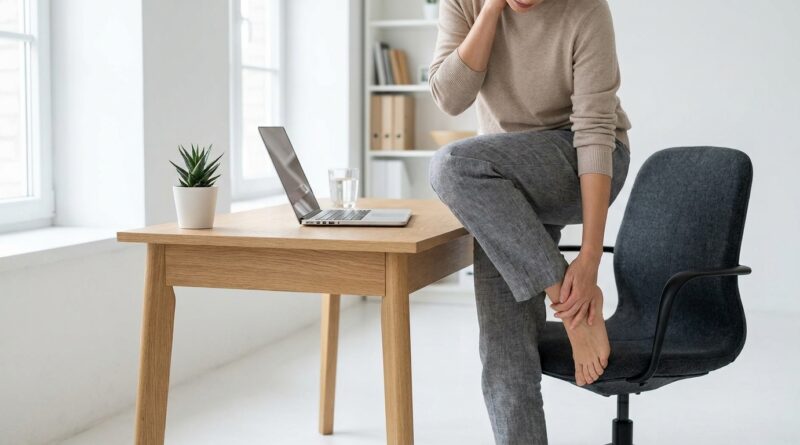
The 5‑Pillar Micro‑Movement Workday: A Minimalist Way To Fix Your Body While You Work
Your calendar may look organized, your desktop may be clean, and your task list may be color-coded. But if your hips are locked up, your shoulders are creeping toward your ears, and your nervous system is humming like a cheap refrigerator, your body is paying for your productivity. That is frustrating because it sneaks up on you. You do not feel “injured.” You just feel off. Foggy at 2 p.m. Restless at 4. Weirdly tired after sitting all day.
A minimalist micro movement workday is a simple fix for that problem. Not a gym plan. Not a standing desk shopping spree. Just a few small movements dropped into the workday at the right times, so your body stops acting like office furniture and starts helping your brain again. The goal is not to “work out” while you work. The goal is to keep your joints moving, your breathing calm, and your energy more even, with almost no friction.
⚡ In a Hurry? Key Takeaways
- A minimalist micro movement workday uses short, repeatable movement breaks to reduce stiffness, anxiety, and mental drag without leaving your desk for long.
- Start with five simple pillars: breathe, stand, open the hips, reset the upper body, and walk for one minute between work blocks.
- If you have pain, numbness, dizziness, or an existing injury, keep movements gentle and check with a medical professional before doing more.
Why sitting still wrecks more than your back
Most people think the problem is posture. Posture matters, sure. But the bigger issue is being frozen in one shape for hours.
Your hips stay bent. Your ribs barely move. Your neck juts forward. Your eyes lock onto one distance. Even if you are “just working,” your body reads that stillness as stress over time.
That shows up in sneaky ways. Shallow breathing. Tight jaw. Random shoulder tension. A low buzz of anxiety that feels mental, but often starts as physical strain.
This is why some people keep adding productivity systems and still feel lousy by dinner. If your body is quietly draining you all day, your focus never gets a fair shot. That is also why The 5‑Pillar Low‑Friction Day: A Minimalist Way To Get More Done Without Quietly Draining Your Body lands with so many desk workers. Smooth days are not just about better planning. They are also about less physical friction.
What a minimalist micro movement workday actually looks like
This is not about doing burpees beside your printer.
A good minimalist micro movement workday is boring in the best way. It uses tiny resets that are easy enough to do without changing clothes, sweating through a meeting, or turning your workday into a fitness challenge.
The sweet spot is 20 to 90 seconds at a time. Done often. Done on purpose. Done before your body starts yelling.
The 5 pillars
1. Breathing resets
When you focus hard, you often stop breathing well. Not fully. Not rhythmically. You breathe high in the chest, then your body slowly shifts into a mild stress state.
Fix that first. It is fast.
Try this: every time you finish a task or send a batch of emails, do five slow breaths. In through the nose. Long exhale through the nose or mouth. Let your ribs expand, not just your shoulders.
This helps more than people expect. A longer exhale can calm your system, lower the sense of urgency, and make it easier to start the next task without carrying tension forward.
2. Stand and change shape
Your best posture is your next posture.
If you have been sitting for 30 to 60 minutes, stand up. Reach overhead. Gently lean side to side. Put one foot up on a small box or step if you have one. Shift your weight around.
You are not trying to look graceful. You are reminding your joints that they still exist.
The big win here is variety. Your tissues like movement changes more than heroic effort once a day.
3. Open the hips
Desk life parks the hips in flexion all day. That can leave your lower back doing extra work, your glutes half asleep, and your legs feeling strangely heavy.
Use one simple move you will actually remember. A few options:
- Standing hip flexor stretch for 20 seconds per side
- Chair figure-four stretch
- Ten slow bodyweight good mornings
- March in place for 30 seconds
Pick one. Do not build a menu of 17 options. Minimalism matters because complexity kills consistency.
4. Upper-body decompression
If your shoulders are rounding forward and your neck is doing all the work, your brain often reads that as fatigue even before your muscles do.
Try a quick reset:
- Shrug shoulders up, then relax them down
- Squeeze shoulder blades gently together three to five times
- Tuck chin slightly back, like making a double chin
- Reach arms wide and rotate palms out
This takes less than a minute and can stop that “computer gremlin” posture from becoming your whole personality by 3 p.m.
5. One-minute walking transitions
This might be the most useful pillar of all.
Between meetings, after a focus block, or before lunch, walk for one minute. Down the hall. To the kitchen. Around the room. Outside and back if you can.
Walking resets more systems at once than most desk stretches. Eyes shift distance. Ankles move. Arms swing. Breathing changes. The mind gets a tiny mental palate cleanse.
If you do nothing else, do this one.
How to fit this into a real workday without making it annoying
The mistake is waiting until you feel awful. By then, the workday has already stiffened around you.
Instead, attach each movement to something that already happens.
Easy trigger points
- After every bathroom trip, do a 20-second hip stretch
- After every meeting, walk for one minute
- After sending a finished task, take five slow breaths
- When coffee brews, do upper-body resets
- At the top of every hour, stand and reach
This is the whole trick. Do not rely on motivation. Use routine.
A sample minimalist micro movement workday
Here is a simple version for an office or work-from-home setup:
Start of day
Before opening email, stand up, reach overhead, and take five slow breaths. Total time: 30 seconds.
Mid-morning
After your first deep work block, walk for one minute and do a shoulder reset. Total time: 90 seconds.
Before lunch
Do a hip opener on each side. Then walk to lunch instead of scrolling first. Total time: 60 seconds.
Mid-afternoon slump
Stand up, march in place for 30 seconds, then do three long exhales. Total time: 45 seconds.
End of day
Before closing the laptop, stretch the chest, open the hips, and take one short walk. Total time: 2 minutes.
That is not a workout. It is barely five minutes total. But five minutes placed well can feel better than 45 minutes you never get around to.
What this can help with
Let’s keep this realistic. A minimalist micro movement workday will not solve every ache or replace proper training, rehab, or sleep.
But it can help with:
- afternoon stiffness
- neck and shoulder tension from screen work
- mental fog after long sitting
- background stress from shallow breathing
- the weird “tired but wired” feeling at the end of the day
It also lowers the pressure around exercise. Once your body feels a little better during the day, it is often easier to get back into normal workouts later because movement no longer feels like such a big leap.
What not to do
You do not need to overbuild this.
- Do not buy a pile of gear before you start
- Do not set a timer for every 12 minutes if that will wreck your focus
- Do not force dramatic stretches if your body is cold or irritated
- Do not turn this into another thing to fail at
Start tiny. Keep it almost laughably easy. The best system is the one that survives a busy Tuesday.
When to be careful
If you have sharp pain, recent surgery, dizziness, numbness, sciatica, repetitive strain injuries, or a known medical issue, keep things gentle and get personal advice if needed.
Micro-movement should feel relieving, not punishing. If a move makes symptoms worse, stop doing that move. There is no prize for pushing through neck pain at your desk.
At a Glance: Comparison
| Feature/Aspect | Details | Verdict |
|---|---|---|
| Time required | 20 to 90 seconds at a time, usually under 5 to 8 minutes total across the workday | Very realistic for busy knowledge workers |
| Equipment needed | Usually none. A chair, floor space, or hallway is enough | Excellent low-friction habit |
| Best benefit | Less stiffness, calmer breathing, better energy, and smoother transitions between tasks | Best used as daily maintenance, not a full fitness replacement |
Conclusion
The productivity world loves to talk about focus, deep work, and cleaner systems. That stuff matters. But a lot of people are trying to think clearly inside bodies that feel locked up, overcaffeinated, and mildly frazzled from sitting still all day. That missing piece is why a minimalist micro movement workday matters right now. It turns the reality of desk life into something useful by adding tiny physical resets that cut decision fatigue, lower background anxiety, and keep energy steadier without needing another app or another coffee. For the 5J crowd, this is a simple modern pillar set worth keeping. Five small physical habits that help restore the body carrying all your other systems. Start with one today. Your brain will notice, and so will your back when you close the laptop.