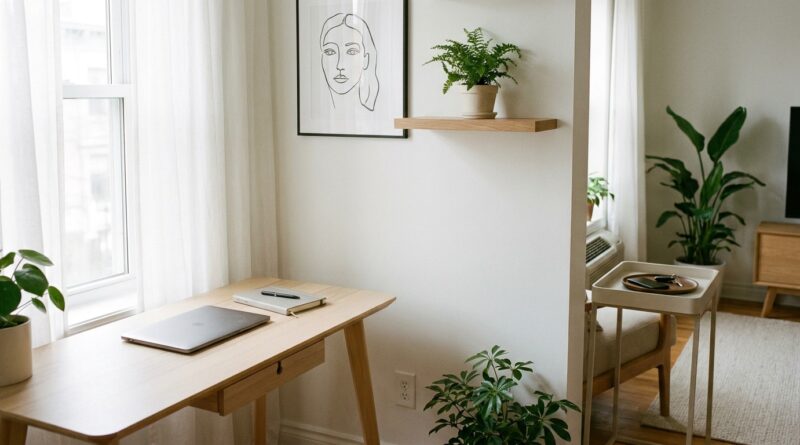
The 5‑Pillar Minimalist Home Focus System: A Simple Way To Make Your Space Work Like A Second Brain
You can have the best planner in the world and still get nothing done if your home keeps hijacking your attention. That is the part a lot of productivity advice skips. You sit down to work, then your eyes catch laundry on the chair, a pile of unopened mail, or the TV remote sitting like an invitation. Your phone is always within reach, because of course it is. Then one message turns into ten minutes, ten minutes turns into a mood, and suddenly the afternoon is gone.
A good minimalist home productivity setup is not about making your place look like a design magazine. It is about removing little frictions that wear down your focus all day. Think of your room as a second brain. It should hold cues, limits, and simple defaults so you do not have to keep making fresh decisions. The goal is not perfection. The goal is to make it easier to start, easier to stay on task, and easier to reset when life happens.
⚡ In a Hurry? Key Takeaways
- A minimalist home productivity setup works best when your space reduces distractions instead of adding more decisions.
- Start with five simple pillars: a focus zone, phone parking spot, visual reset, sound control, and fast end-of-day cleanup.
- You do not need to buy much. This works in rentals, shared homes, and small rooms because it is more about placement than products.
Why your home can wreck your focus
At home, everything has competing jobs. The table is a desk, dining area, dumping ground, and charging station. The couch is for resting, scrolling, working, and sometimes eating. That sounds flexible. In practice, it can make your brain feel like every room is asking something from you at once.
When your space sends mixed signals, your attention gets chipped away. You do not always notice it happening. You just feel oddly tired, resistant, and scattered.
That is why a minimalist home productivity setup matters. It gives each space a clearer job, even if you live in a studio apartment or share a home with other people.
The 5-pillar minimalist home focus system
You do not need a full makeover. You need a few reliable defaults. These five pillars help your space support your attention instead of stealing it.
1. Create one clear focus zone
Your focus zone is the place where work happens most often. It does not need to be a separate office. It can be one end of a table, one chair by a window, or one tray that turns a corner into a work spot.
The key is consistency. When possible, do your concentrated work in the same place. Your brain starts to connect that spot with effort and follow-through.
Keep only the basics in view:
- Laptop or notebook
- One pen
- Water
- Task list
- Good enough lighting
If you look up and see bills, hobby supplies, or three unrelated gadgets, your brain has to keep filtering them out. That filtering costs energy.
2. Give your phone a home that is not your hand
This one is bigger than people think. Most of us do not just use the phone. We orbit it.
Create a phone parking spot outside your immediate reach when you need to think. It can be a shelf, kitchen counter, entry table, or even a drawer. The point is simple. Your phone should live somewhere on purpose, not drift around the house looking for your attention.
If you need it nearby for calls or family reasons, put it behind you, not beside you. That small change helps more than you would expect.
Make it boring:
- Turn off non-essential notifications
- Use grayscale during work blocks if that helps
- Charge it away from your bed and work zone when possible
This is not about self-control as a personality trait. It is about reducing temptation before it starts.
3. Reduce visual noise at eye level
Visual clutter is sneaky. You may think you are ignoring it, but your brain is still tracking it in the background.
Start with whatever is in your direct line of sight from your work spot. That matters more than the whole room. If the pile behind you is not visible, it can wait. If the pile in front of you keeps tugging at your attention, fix that first.
Try the three-item rule for surfaces you see often. Leave no more than three visible categories out at once. For example:
- Work tool
- Light or plant
- Drink or notebook
Everything else should either be stored, stacked neatly, or moved out of sight until needed. Minimalism here is not about owning less for the sake of it. It is about showing your brain less.
4. Control sound with simple layers
Noisy spaces are exhausting, especially when the sound is unpredictable. You cannot always make home silent. You can make it steadier.
Build a basic sound plan with layers:
- First layer: close doors, windows, or curtains if it helps
- Second layer: use soft furnishings to absorb harsh echo
- Third layer: add a steady sound like a fan, white noise, or quiet instrumental music
If you live with others, use simple signals. Headphones on might mean “I am in a focus block.” A small sign on the table can work too. It does not have to be formal or awkward.
And if your body feels wrecked after long sitting sessions, pair this setup with movement breaks. Our guide on The 5-Pillar Anti-Desk Workday: A Minimalist Way To Stay Healthy When You Sit All Day fits naturally with this kind of home system.
5. Build a two-minute reset
The best focus systems are easy to restart after real life interrupts them. That means you need a reset that is fast enough to actually use.
Your two-minute reset might look like this:
- Put the phone back in its parking spot
- Throw away obvious trash
- Stack papers into one pile
- Return dishes to the kitchen
- Leave tomorrow’s first task visible
That is enough. You are not deep cleaning. You are returning the room to neutral.
A neutral room is powerful because it lowers the friction of starting again tomorrow. You do not wake up already behind.
How to set this up if you live in a small space
Small spaces need sharper boundaries, not more furniture. In a studio or shared room, use portable cues.
Use movable zones
A tray, basket, or laptop sleeve can define “work mode” without claiming a whole room. When you bring it out, your workspace exists. When you put it away, the room returns to normal life.
Face the least distracting direction
If you can choose where you sit, face a wall, a calm window view, or the cleanest part of the room. Do not face the bed, TV, or storage chaos if there is another option.
Store by speed, not by category
Put away the things that most often derail you first. That may be chargers, paperwork, snacks, beauty items, or random cables. Traditional organizing says group like with like. Real-life focus says hide what creates the most temptation and visual drag.
What not to do
A lot of productivity setups fail because they become another project to maintain.
Do not overbuy
You probably do not need matching bins, a new desk lamp, and three wall organizers. Use what you have first. A shoebox in a drawer can beat an expensive organizer if it removes one daily annoyance.
Do not create a system with too many rules
If every item has a complicated storage ritual, you will stop using the system. The simpler the reset, the longer it lasts.
Do not chase a perfect aesthetic
A clean-looking room is nice. A room that helps you start work with less resistance is better. Pick function first.
A simple weekend reset plan
If your home feels too far gone for tiny tweaks, do this once and keep it modest.
Step 1: clear one work surface
Not the whole room. Just one surface you can use this week.
Step 2: choose your phone parking spot
Make the decision now so you do not renegotiate it every day.
Step 3: remove five visible distractions
Think in terms of what your eyes catch, not what a closet hides.
Step 4: set up one sound solution
Fan, headphones, closed curtain, door draft stopper, whatever helps most in your space.
Step 5: write your two-minute reset list
Keep it somewhere visible for a week until it becomes automatic.
At a Glance: Comparison
| Feature/Aspect | Details | Verdict |
|---|---|---|
| Focus zone | One consistent spot with only essential tools visible | High impact, low cost |
| Phone parking | A fixed place away from your body during work blocks | Probably the fastest win |
| Two-minute reset | Short cleanup that returns the room to neutral each day | Best for keeping the system alive |
Conclusion
People are more distracted at home than ever, and most advice still shouts about routines and apps while ignoring the room you are actually sitting in. That is why a minimalist home productivity setup can feel so different. It deals with the real friction points hour by hour. Where your phone goes when you need to think. What stares back at you when you look up from your laptop. How quickly you can take a messy room back to neutral. The good news is that this does not require a big budget, a bigger house, or a total life overhaul. It works for renters, small spaces, and regular messy humans. Start with one pillar today. Even one small change can make your home feel less like a distraction machine and more like quiet backup for your brain.