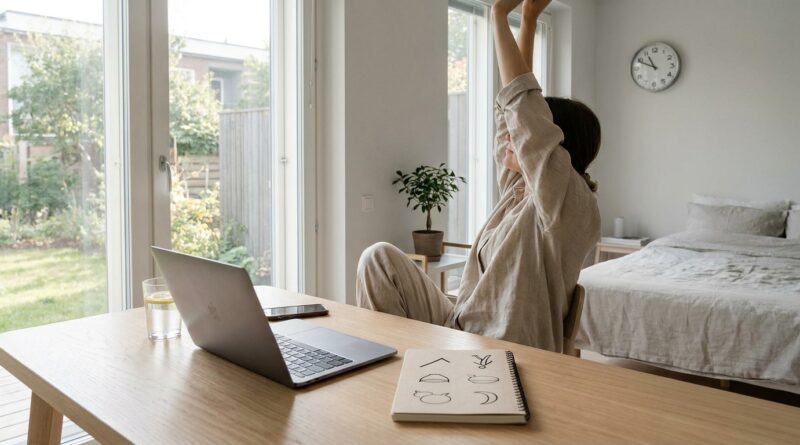
The 5-Pillar Slow-Flow Life: A Minimalist Way To Do Less, Feel Better, And Still Get Stuff Done
You are not lazy. You are overloaded. That wired-but-tired feeling, where your body is sitting still but your brain is sprinting, is what happens when every part of life starts asking for the same thing at once. Work pings. Phone pings. Group chats. Errands. Half-finished plans. You look busy on paper, but somehow end the day feeling dull, scattered, and weirdly behind. That is why slow living sounds so appealing, and also so slippery. Most advice makes it sound like you need to move to a cabin, quit your job, or start journaling at sunrise. You do not. A practical slow-flow routine is much simpler. It is a minimalist way to build your day around five pillars that support energy, focus, and mood. Do less, yes. But do the right less. That is how you still get stuff done without feeling like your nervous system is paying the bill.
⚡ In a Hurry? Key Takeaways
- A slow productivity minimalist lifestyle works best when you focus on five simple pillars: pace, movement, food, sleep, and connection.
- Start with one tiny change tomorrow, like a slower first hour, a short walk, or a fixed bedtime, instead of trying to redesign your whole life at once.
- If your stress, fatigue, or low mood feels constant, treat this framework as support, not a substitute for medical or mental health care.
What “slow-flow” actually means
Slow-flow is not about doing everything in slow motion. It is about dropping the frantic, jagged pace that burns through your attention and replacing it with a steadier rhythm you can actually live with.
Think of it this way. A lot of modern productivity systems only ask one question: “How can I fit more into the day?” Slow-flow asks a better one: “What pace lets me do what matters without frying my brain?”
That is the heart of the slow productivity minimalist lifestyle pillars approach. Fewer moving parts. Less fake urgency. More support for your body and mind, so your output is not built on fumes.
If you want to apply the idea more directly to office hours and task lists, this companion piece, The 5‑Pillar Slow‑Living Workday: A Minimalist Way To Get More Done By Doing Everything Slower On Purpose, is a useful next step.
The 5 pillars of a slow-flow life
1. Pace: Stop treating every hour like an emergency
This is the pillar most people miss. They try to eat better or sleep more, but they still rush every basic task like they are late for a flight.
A slower pace does not mean low standards. It means fewer abrupt switches, fewer self-inflicted deadlines, and less stuffing of the calendar “just because there is space.”
Try this:
- Pick three must-do tasks for the day, not twelve.
- Leave buffer time between meetings and errands.
- Do one thing at a time for 20 to 30 minutes, with notifications off.
- Start your morning without grabbing your phone in the first 15 minutes.
If your brain always feels like it has 37 browser tabs open, pace is where relief starts. You are not only managing time here. You are managing internal noise.
2. Movement: Use your body to reset your mind
You do not need a perfect workout plan. You need regular proof to your nervous system that your body is still part of the day.
When people are stressed, they often become mentally overactive and physically underactive. Bad mix. Even light movement can cut through that foggy, flat feeling better than another coffee.
Try this:
- Take a 10-minute walk after lunch.
- Stretch while the kettle boils or before your first meeting.
- Stand up every hour and move for two minutes.
- Choose “enough” movement over heroic movement.
The goal is not to become a gym person by Tuesday. The goal is to help your body finish stress cycles instead of storing them all day.
3. Food: Eat in a way that supports stable energy
A lot of “busy” eating is really emergency fueling. You skip breakfast, inhale something random at 2 p.m., then wonder why your focus crashes at 4.
Slow-flow eating is less about strict rules and more about reducing chaos.
Try this:
- Build one reliable breakfast or lunch you can repeat.
- Keep simple backup foods at home or work, like yogurt, eggs, fruit, nuts, soup, or sandwiches.
- Sit down when you eat, even for 10 minutes.
- Notice what gives you steady energy versus a quick spike and crash.
Minimalism helps here too. You do not need a fancy meal-prep identity. You need fewer food decisions made while tired and hungry.
4. Sleep: Treat rest like a tool, not a reward
Many people accidentally use sleep as leftover time. Everything else gets handled first, then sleep gets whatever remains. That works for a while. Then the brain fog, short temper, and fake hunger show up.
Sleep is not a luxury item in a slow-flow system. It is load-bearing.
Try this:
- Set a realistic bedtime, not an aspirational one.
- Create a 30-minute “power down” routine with lower light and less screen hopping.
- Keep wake time roughly consistent, even if bedtime varies a bit.
- Do not use revenge bedtime scrolling as your only form of freedom.
That last one is hard, because it often feels like the only quiet time you have. But if your evenings are your only escape hatch, your days probably need better pacing.
5. Connection: Add one tiny social ritual
This one seems small, but it matters. Human beings do worse when every interaction becomes transactional. A slow-flow life needs a little warmth in it.
This does not mean becoming wildly social. It means adding one small repeatable point of connection.
Try this:
- Text one friend a real message, not just a reaction emoji.
- Have a short check-in with a partner before screens take over at night.
- Say hello to the same neighbor, barista, or coworker on purpose.
- Take one walk per week with another person.
Connection helps regulate mood in a way no app really can. It reminds your brain that life is not only tasks, inputs, and alerts.
Why this works better than chasing optimization
A lot of advice turns health into a side quest. First you get productive, then later, if you have time, you fix your sleep, diet, stress, and posture.
That is backward.
Your mood, energy, and attention are not separate from productivity. They are the operating system. When they are shaky, everything feels harder, slower, and more dramatic than it needs to.
The five-pillar model works because it is realistic. It does not ask you to become a new person. It asks you to support the person who already has a job, a phone, responsibilities, and a tired brain.
A one-page slow-flow routine you can try tomorrow
Here is a simple version. No gadgets. No paid planner. No life overhaul.
Morning
- Do not check your phone for the first 15 minutes.
- Drink water and open a window or step outside.
- Move your body for 5 to 10 minutes.
- Choose your top three tasks before opening everything else.
Midday
- Eat a real meal, sitting down if possible.
- Take a 10-minute walk or stretch break.
- Do one work block with notifications off.
Afternoon
- Check whether you are adding fake urgency to the day.
- Drop one nonessential task, if needed.
- Send one human message to someone you care about.
Evening
- Set tomorrow’s top three tasks.
- Lower screen intensity 30 minutes before bed.
- Keep bedtime boring and consistent.
That is it. The point is not perfection. The point is creating a rhythm your body can trust.
Common mistakes when starting a slow-flow life
Trying to fix all five pillars in one day
This usually lasts 48 hours and ends with mild guilt and a late-night takeaway. Pick one pillar first. Build proof. Then add another.
Confusing “slow” with “passive”
Slow-flow still includes effort, structure, and follow-through. You are not giving up on goals. You are removing needless friction and drama.
Making your routine too precious
Real life is messy. Kids get sick. Work blows up. Sleep gets weird. The framework should bend without breaking. If you miss a day, restart at the next decision point.
Using your phone as both work tool and emotional pacifier
This is a big one. The same device you need for maps, messages, calendars, and work can also become the thing that keeps your brain buzzing. Slow-flow often improves fast when you reduce default scrolling and turn off nonessential notifications.
Who this approach is best for
This style works especially well if:
- You feel busy all the time but do not feel deeply effective.
- You are tired of extreme routines that fall apart by Thursday.
- You want better focus without becoming obsessed with productivity hacks.
- You know your body is part of the problem, not just your calendar.
It can also help if you have drifted into a life where every spare minute gets absorbed by your phone. Slow-flow creates enough breathing room for your own thoughts to come back online.
At a Glance: Comparison
| Feature/Aspect | Details | Verdict |
|---|---|---|
| Traditional productivity | Focuses on fitting more in, cutting seconds, and maximizing output, often without much regard for stress or recovery. | Useful in short bursts, but easy to overdo. |
| Slow-flow framework | Uses five pillars, pace, movement, food, sleep, and connection, to support steady focus and better mood with less strain. | Best for sustainable results and real-life balance. |
| Full lifestyle overhaul | Big, inspiring resets with strict routines, lots of rules, and major identity changes. | Tempting, but harder to keep going. |
Conclusion
People are finally saying the quiet part out loud. Constant busyness and nonstop screen time are messing with focus, mood, and energy. Most of us do not need more tricks to squeeze harder. We need a more humane rhythm that still works in normal modern life. That is where the five-pillar slow-flow framework earns its place. It gives you a practical way to connect slow living with everyday reality: a bit more movement, steadier food, better sleep, gentler pacing, and one small social habit that keeps you feeling human. None of it requires buying an app, a device, or a course. More important, it treats health and mood as part of getting things done, not some optional extra you will deal with later. Start small tomorrow. Pick one pillar. Make it easier. Then let that calmer pace spread from there.