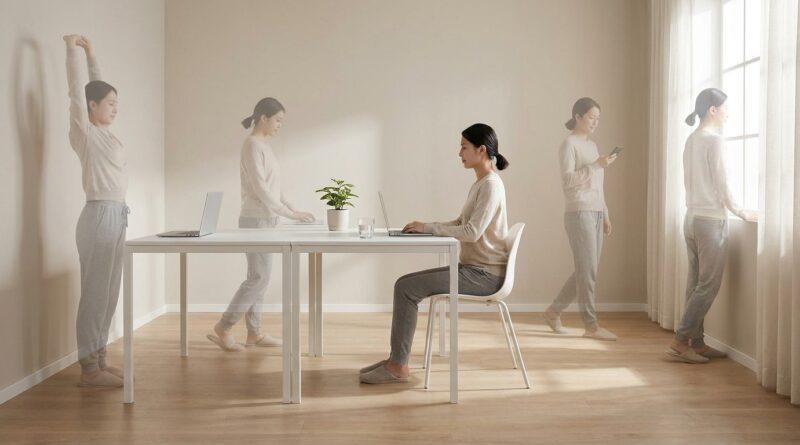
The 5-Pillar Anti-Desk Workday: A Minimalist Way To Stay Healthy When You Sit All Day
You do not need a standing desk, a smartwatch, and a new personality to stop feeling wrecked by your workday. If you sit for hours, you already know the pattern. Your shoulders creep up. Your lower back starts grumbling. By midafternoon, your brain feels like warm oatmeal and your body has barely moved. That is frustrating, especially when most advice sounds like it was written for people with a home gym, long lunch breaks, and endless discipline. Real life is messier than that. The good news is that minimalist desk job health habits can help without turning your calendar into a wellness boot camp. The trick is to stop chasing the perfect routine and build tiny loops that fit inside the day you already have. Think less “total lifestyle overhaul,” more “five small moves that quietly protect your body, focus, and energy while you work.”
⚡ In a Hurry? Key Takeaways
- Use five tiny habits during your workday: stand, walk, reset posture, rest your eyes, and create short focus breaks.
- Attach each habit to something you already do, like meetings, bathroom trips, email sends, or refilling water.
- If you have pain, dizziness, numbness, or ongoing strain, these habits can help but they are not a substitute for medical care or an ergonomic assessment.
The problem is not that you are lazy
You are busy. You are screen-tired. You are probably juggling messages, deadlines, tabs, and low-grade stress for most of the day. So when someone says, “Just get 10,000 steps and do mobility work every hour,” it lands with a thud.
That is why a minimalist approach works better. You do not need a perfect health plan. You need a few repeatable actions that ask almost nothing from you.
The goal of this anti-desk workday is simple. Reduce the damage of long sitting. Support your focus. Make your body feel less trapped by 5 p.m.
If you like tiny systems, you might also enjoy The 5‑Pillar One‑Minute Reset: A Minimalist Way To Fix Your Day In Five Tiny Moves. It has the same spirit. Small actions, low drama, real life.
The 5-pillar anti-desk workday
1. The stand pillar
First, interrupt the chair. Not with a 30-minute workout. Just with standing.
Every 30 to 60 minutes, stand up for 30 to 90 seconds. That is it. You can do it while reading a document, waiting for a file to upload, or after sending a batch of emails.
Standing changes more than people think. It gives your hips a break, gets your joints moving, and helps stop that folded-up feeling that builds through the day.
Zero-friction trigger: Stand every time you finish a meeting, send a big email, or take a sip from a newly refilled water bottle.
Why it works: You are not relying on motivation. You are tying movement to events that already happen.
2. The walk pillar
Short walks beat good intentions. A two-minute walk to the kitchen, hallway, stairs, mailbox, or even the other side of your office counts.
The point is not athletic glory. The point is breaking up long stillness. Even tiny walks can help with stiffness, energy, and mental reset.
If your day is packed, start with three micro-walks. Morning. Lunch. Midafternoon.
Zero-friction trigger: Walk during phone calls when you can. Walk before opening social media. Walk after bathroom breaks instead of heading straight back to the chair.
Make it easier: Put your water a little farther away. Use the less convenient printer. Choose friction that helps you.
3. The posture pillar
Perfect posture is overrated. Changing posture is underrated.
You do not need to sit like a marble statue. You need to stop freezing in one position for too long. That is when neck, shoulder, and lower back tension start piling up.
Try a 20-second posture reset a few times a day. Plant both feet. Relax your shoulders. Gently lift your chest. Bring your screen a little higher if you keep dropping your chin.
If your laptop is too low, put it on a stack of books and use a separate keyboard if you have one. This is one of the cheapest comfort upgrades around.
Zero-friction trigger: Do a posture reset every time you unlock your phone or open a new browser tab.
Reality check: The best posture is your next posture. Move often. That matters more than chasing “perfect.”
4. The eye pillar
Your eyes are working overtime, especially if you bounce between spreadsheets, chats, and tiny text all day. Eye strain does not just make your eyes tired. It can feed headaches, tension, and that foggy feeling that makes you reread the same sentence three times.
Try the 20-20-20 rule. Every 20 minutes, look at something about 20 feet away for 20 seconds. If that sounds too fussy, simplify it. Just look away from your screen on purpose several times an hour.
Zero-friction trigger: Look out a window after every email batch, task switch, or calendar notification.
Bonus help: Increase text size. Reduce glare. Clean your screen. Very boring advice. Very useful advice.
5. The focus pillar
This one sounds less physical, but it protects your health too. Mental fatigue often leads to physical freeze. The more overloaded you feel, the more likely you are to hunch, stare, and forget to move for hours.
Use short focus blocks with tiny breaks. For many people, 25 to 45 minutes of focused work followed by 1 to 3 minutes of standing, stretching, breathing, or walking works well.
This is not about squeezing more productivity from yourself like a machine. It is about giving your brain clean edges. Work. Pause. Reset. Continue.
Zero-friction trigger: Pair every completed work block with one body action. Stand. Stretch. Walk. Look outside. Drink water.
Why it matters: Better focus lowers the odds that you will sit motionless for half a day without noticing.
How to make these habits stick without “trying harder”
The secret is not discipline. It is design.
Use existing anchors
Do not create five new reminders if reminders annoy you. Attach habits to things that already happen.
- After meetings, stand.
- After bathroom trips, walk another minute.
- After refilling water, do a posture reset.
- After task switches, look away from the screen.
- After focus blocks, move.
Lower the bar until it feels almost silly
If your habit feels too small, good. Tiny habits survive busy days. “Stand for 45 seconds” gets done. “Completely transform my health” gets postponed.
Do not try to win all five on day one
Start with two pillars this week. Add the rest once they feel normal. The best system is the one you stop noticing because it has become part of your day.
What this approach can and cannot do
Let us keep this honest. These minimalist desk job health habits will not erase every risk that comes with sitting all day. They will not replace exercise, sleep, or medical care. If your setup is truly awful, better ergonomics still matter.
But these habits can do something important. They can reduce long stretches of stillness. They can cut some of the stiffness, eye strain, and brain fog. They can help you feel more human at your desk.
And because they are small, they are more likely to happen consistently. Consistency beats heroic plans that collapse by Thursday.
A simple starter plan for tomorrow
If you want the easiest possible version, use this:
- Morning: Stand after your first two email batches.
- Late morning: Take one two-minute walk.
- Lunch: Walk before sitting back down.
- Afternoon: Do one posture reset after each meeting.
- All day: Look away from the screen whenever you switch tasks.
That is not a fitness plan. It is a damage-control plan. For many desk workers, that is the right place to start.
At a Glance: Comparison
| Feature/Aspect | Details | Verdict |
|---|---|---|
| Time required | Most habits take 20 seconds to 3 minutes and fit between normal tasks. | Very practical for busy desk jobs |
| Cost | Free, or nearly free if you use books to raise a laptop or adjust your setup. | Excellent value |
| Long-term benefit | Helps reduce uninterrupted sitting, supports comfort, and may improve focus and energy over time. | Best when done consistently, not perfectly |
Conclusion
You do not need to panic every time you see another headline about desk jobs ruining your health. And you do not need to buy your way out of the problem or turn wellness into a second career. A calmer answer works better. Five small loops. Stand. Walk. Reset posture. Rest your eyes. Protect your focus. These habits live inside a normal workday, which is exactly why they have a shot at lasting. That is the real value here. It bridges the gap between “I know sitting is bad” and “here is exactly how to fix it in five simple loops I can start today.” Start small tomorrow. Then let the small stuff do its job.