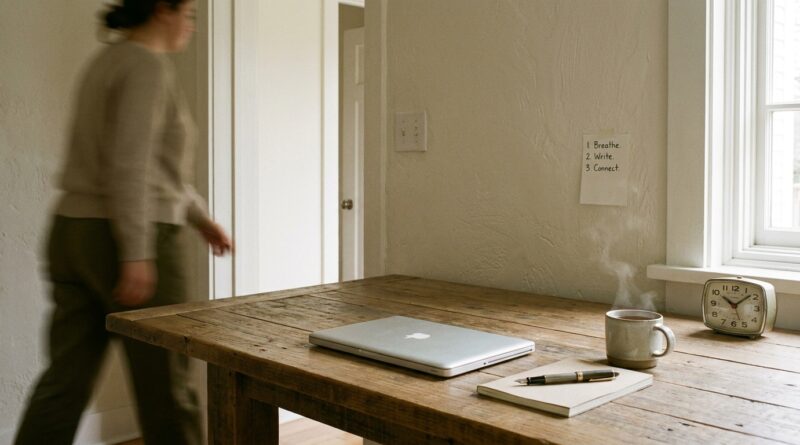
The 5‑Pillar Slow Pace Workday: A Minimalist Way To Get More Done By Doing Everything Slower
By noon, a lot of people have answered 27 messages, checked six tabs, sat through two meetings, and still have not touched the one thing that actually matters. If that sounds familiar, you are not lazy or bad at focus. You are working at inbox speed while trying to do work that needs calm, depth, and a bit of your actual brain. That mismatch is exhausting. It is why the day feels busy but strangely empty at the same time. A slow productivity minimalist workday is not about doing less because you have given up. It is about changing the pace so your attention stops getting shredded. The good news is you do not need a new job, a cabin in the woods, or a color-coded life system. You can slow the workday down inside a normal schedule. These five pillars are a simple way to start tomorrow morning and feel the difference before the day is over.
⚡ In a Hurry? Key Takeaways
- Slow productivity works by changing your pace, not by cramming more into the same frantic day.
- Use five pillars: slower starts, fewer switches, larger focus blocks, calmer communication, and proper stopping points.
- This is a practical way to protect attention and energy without changing jobs, cutting hours, or ignoring real responsibilities.
Why slowing down can get more done
It sounds backwards at first. Work slower to finish more. But think about what ruins most workdays. It is not usually a lack of effort. It is constant switching.
You read an email. Jump to chat. Open a document. Check a calendar. Reply to a quick message. Take a call. Go back to the document and spend five minutes remembering what you were doing. That is not productivity. That is recovery time stacked on recovery time.
The slow productivity minimalist workday trims that hidden waste. You do fewer context switches, make fewer rushed decisions, and give important work enough uninterrupted time to become easier.
Slow is not lazy. Slow is steady enough to think clearly.
The 5 pillars of a slow pace workday
1. Start slower than your inbox wants you to
The first 30 to 60 minutes set the speed of the whole day. If you begin by reacting, you stay reactive. If you begin by orienting yourself, you are far more likely to do work on purpose.
That means no instant dive into email, chat, and alerts the second you sit down. Instead, start with three simple steps:
- Look at your calendar and commitments.
- Pick the one task that would make the day feel solid if it got done.
- Spend a few minutes clearing your workspace and opening only what that task needs.
This is not wasted time. It is setup time. The same way a cook lays out ingredients before cooking, you are getting your brain ready for actual work.
If your mornings feel foggy, your environment may be part of the problem. A helpful companion read is The 5‑Pillar Natural‑Light Workday: A Minimalist Way To Fix Your Energy Without More Coffee. Better light and a calmer start often work hand in hand.
2. Reduce switches, not effort
Most people try to improve output by trying harder. A better move is to switch less.
Every time you change tasks, your brain pays a small tax. One switch is no big deal. Fifty switches is your whole afternoon gone.
Try this minimalist rule. Keep only one primary task open at a time, plus one support tool if needed. For example, if you are writing a report, maybe you have the report and your source notes open. Not the report, your inbox, Slack, three browser tabs, and a news site pretending to be a break.
Also, batch the shallow stuff. Answer messages at set times instead of living inside them all day. Even two or three communication windows can be enough for many desk jobs.
People often fear this will make them look unresponsive. In reality, it usually makes responses better and more thoughtful. Fast is not always useful.
3. Work in bigger, calmer blocks
Deep work rarely happens in scraps. A ten-minute gap between notifications is not depth. It is just a pause in the chaos.
A slow pace workday uses larger blocks for important tasks. Think 45, 60, or 90 minutes, depending on your role and stamina. During that block, do one thing. Not the most urgent-looking thing. The most important one.
This is where many people get stuck, because they assume a focus block must feel intense. It does not. In fact, the best focus often feels almost boring. Quiet. Steady. Undramatic.
That is a good sign.
If 60 minutes feels impossible, start with 25. Protect it. Then build up. The goal is not to win a productivity contest. The goal is to retrain your day so concentration becomes normal again.
4. Communicate at a human pace
A lot of workplace stress comes from the belief that every ping deserves instant attention. It does not.
Slow productivity does not mean ignoring people. It means answering in a way that protects both clarity and attention. That may look like:
- Turning off non-essential notifications.
- Using status messages like “Heads down on a project, back at 11:30.”
- Replying in batches instead of drip-feeding your focus all day.
- Writing clearer messages so fewer back-and-forths are needed.
This is the pillar that often changes team culture fastest. When one person starts communicating calmly and clearly, others often follow. Not always, of course. Some jobs are genuinely reactive. But even then, most people can create small islands of calm.
If something is truly urgent, people will usually find a way to make that clear.
5. End with a full stop, not a fade-out
Many workdays do not really end. They blur. You trail off from one half-finished task into an evening of low-grade mental static.
A slow pace workday needs a stopping ritual. Nothing fancy. Five to ten minutes is enough.
Before you log off:
- Write down where you stopped.
- List the first step for tomorrow’s most important task.
- Close tabs you do not need.
- Check that no real loose ends are going to surprise you later.
This matters because unfinished work is sticky. If you leave without a clear place to restart, your brain keeps carrying it. A proper stop helps you rest and makes tomorrow easier to begin.
What this looks like in a normal day
Here is a simple example. Nothing extreme.
Morning
Start with 20 minutes of planning and setup. No inbox yet. Then do a 60-minute focus block on your most important task. After that, check messages and admin in one batch.
Midday
Take a real break. Not a scroll disguised as a break. Eat, walk, stretch, get daylight if possible. Then do a second focus block, even if it is only 45 minutes.
Afternoon
Handle meetings, communication, and smaller tasks in grouped windows. If energy dips, lower the complexity of the work, not your standards. Save high-thought tasks for your better hours when you can.
End of day
Do a 10-minute shutdown. Leave notes for yourself. Stop cleanly.
That may not sound revolutionary. That is the point. Minimalist systems work because you can actually keep using them.
Common mistakes when trying a slower workday
Making it too rigid
You do not need a perfect template. Some days will be messy. The goal is a slower default pace, not a flawless schedule.
Confusing slow with passive
This is not about drifting through the day. It is active, intentional pacing. You are still deciding, doing, and contributing. Just with less frantic switching.
Trying to protect every minute
If your job includes interruptions, work with reality. Protect what you can. Even one strong focus block a day can change how the whole week feels.
Using saved time to add more tasks
This one is sneaky. You get more focused, finish earlier, then immediately stuff the gap with extra work. Try not to. Use some of that space to think, rest, or simply breathe between tasks.
How to test this tomorrow without changing your whole life
If you want to try a slow productivity minimalist workday right away, keep it simple.
- Delay inbox and chat for the first 20 minutes.
- Choose one important task before checking messages.
- Protect one 45-minute focus block.
- Batch communication into two or three windows.
- End the day with a 5-minute restart note for tomorrow.
That is enough for a first test. You do not need a new app. You do not need a seminar. You just need a little friction against the usual frantic pace.
At a Glance: Comparison
| Feature/Aspect | Details | Verdict |
|---|---|---|
| Typical fast-paced workday | Reactive mornings, constant switching, open inbox all day, weak stopping point | Feels busy, often produces shallow output and mental fatigue |
| Slow productivity minimalist workday | Intentional start, fewer switches, larger focus blocks, calmer communication, clean shutdown | Better for deep work, attention, and steady energy |
| Best first step | Protect one early focus block before the inbox takes over | High impact and easy to test within 24 hours |
Conclusion
There is a reason slow productivity and slow living have started showing up everywhere. People are worn out by speed for the sake of speed. They want to protect their attention, do better work, and still meet real responsibilities without feeling like their brain is being dragged across gravel by lunchtime. That is why a slow productivity minimalist workday matters. It does not ask you to quit your job, change your personality, or pretend deadlines do not exist. It simply asks you to slow the pace of the day in five practical ways so your mind can work at a human speed again. Try one pillar tomorrow, or all five if you are ready. Either way, you will likely feel the difference fast. Not because you did more. Because you finally stopped doing everything at inbox speed.