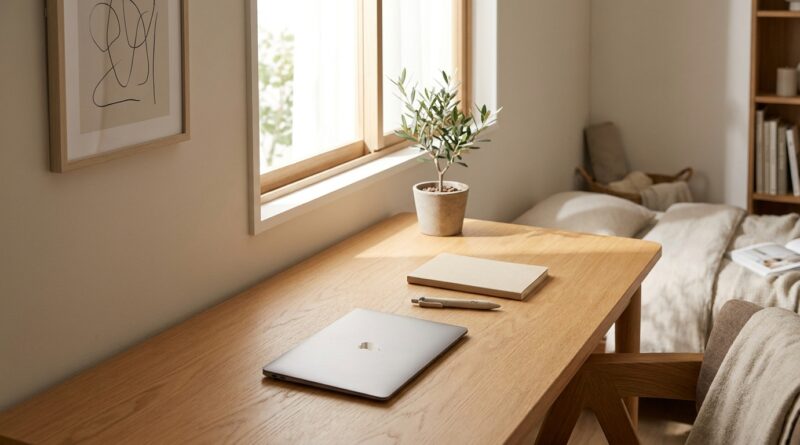
The 5-Pillar Quiet-Workspace Ritual: A Minimalist Way To Get More Done By Fixing The Room, Not Yourself
You sit down to work, open the laptop, and somehow your brain is already tired. The dishes in the corner catch your eye. A buzzing phone pulls you sideways. A too-bright lamp makes the room feel sharp and annoying. Then the self-blame starts. Maybe you need a better planner. Maybe a stricter timer. Maybe more discipline. Honestly, probably not. A lot of focus problems begin before the first click. Your room is sending little interruptions at you all day, and your nervous system keeps answering them. That is why a minimalist workspace productivity ritual can work so well. It does not ask you to become a new person. It asks you to make the room easier on your brain. If your space stops poking at your attention every few seconds, getting started feels lighter, and staying with one task stops feeling like a fight.
⚡ In a Hurry? Key Takeaways
- A minimalist workspace productivity ritual works by lowering visual, sound, light, and device distractions before you begin.
- Use a simple five-point room reset: clear one surface, soften sound, fix lighting, stage your tools, and remove one digital distraction.
- You do not need to buy new gear. Most people can feel a real difference in one afternoon with items they already have.
Why the room matters more than another productivity app
Most focus advice starts with your habits. Track this. Time that. Color-code the other thing. Sometimes that helps. But when the room itself is noisy, messy, bright, cramped, or full of visual clutter, every task starts with friction.
Your brain is not just doing your work. It is also scanning the environment. It notices the laundry pile. The tab you left open. The charger stretched across the floor. The tiny ping from the kitchen. None of these seem huge on their own. Together, they act like dozens of open browser tabs in your head.
That is why environment-first changes can feel so immediate. You are not trying to force more willpower out of an already tired brain. You are reducing the number of things that demand a response.
If that idea clicks for you, it pairs well with The 5-Pillar Decision-Light Day: A Minimalist Way To Stop Burning Out On Tiny Choices. Both approaches cut down on hidden mental load instead of asking you to push harder.
The 5-Pillar Quiet-Workspace Ritual
This ritual is simple on purpose. It should take about 10 to 15 minutes once you get used to it. The goal is not a picture-perfect office. The goal is a room that stops interrupting you.
1. Clear one surface
Start with the area directly in front of you. Not the whole room. Just the main work surface.
Take everything off your desk except what you need for the next block of work. That might be your laptop, one notebook, one pen, and water. If an item is useful later but not now, move it out of sight if you can.
This matters because visible objects keep asking silent questions. Should I deal with this bill? Return that cable? Read that book? A clear surface quiets those questions.
If you share space or work from the kitchen table, use a tray or basket. Put your current tools on it. When work is done, the tray goes away. Fast setup. Fast reset.
2. Soften the soundscape
Silence is great when you can get it. Most people cannot. So the next best move is controlled sound.
Turn off any TV in the background. Mute pointless alerts. Shut a door if you have one. If outside noise is the problem, use a fan, white noise, soft instrumental music, or plain earplugs.
The trick is to replace random sound with steady sound. Random noises steal attention because your brain treats them like possible new information. A stable audio backdrop gives it less to chase.
You do not need expensive headphones for this. Often a cheap fan or a free white-noise app is enough.
3. Fix the light
Bad lighting is sneaky. It does not always feel like a distraction, but it can make you squint, slump, and mentally fade out faster.
If possible, use natural light from the side rather than behind your screen. If your overhead light feels harsh, switch it off and use a warmer lamp. If the room is dim, add more direct light to your work area so your eyes do not work overtime.
Try this quick test. Sit down and notice whether the room feels sharp, gloomy, or flat. If it does, change one thing. Open the blinds. Turn on a lamp. Rotate the desk a little. Small changes can make a room feel much calmer.
4. Stage the tools before you begin
Most people lose focus in the first five minutes because they have to keep getting up. Find charger. Find notes. Find headphones. Find the document. By then the brain has wandered off.
Before you start, place the exact tools for the next task within arm’s reach. Not all your tools. Just the next ones.
For example, if you are writing, open the document, keep your notes nearby, pour water, and plug in the laptop first. If you are paying bills, get the statements, pen, password manager, and bank app ready before sitting down.
This creates what I think of as a low-friction runway. You are making it easy to begin and annoying to drift.
5. Remove one digital trap
Now deal with the loudest digital distraction in the room. Usually that is your phone, but not always.
Put the phone behind you, in a drawer, or across the room. Close extra browser tabs. Quit chat apps for 30 minutes. Turn off desktop notifications. Pick one.
You do not have to become a monk. You just need one less open door for interruptions.
If work requires your phone, flip it face down and switch off non-essential alerts. If work requires many tabs, pin only the ones for this task and close the rest. The goal is not purity. The goal is fewer attention leaks.
How to do the ritual in a single afternoon
If your room feels chaotic, do not try to reinvent everything at once. Use this order.
First 15 minutes
Clear the main work surface. Throw away trash. Remove dishes. Stack unrelated papers somewhere else for later. Do not sort every item right now.
Next 10 minutes
Fix sound and light. Test one better lighting setup. Pick one steady background sound if needed.
Next 10 minutes
Create a tiny work kit. Pen, paper, charger, headphones, water, sticky notes. Put them in one container or one corner.
Last 5 minutes
Choose the digital trap you will block first. Usually that should be phone notifications or stray browser tabs.
That is enough to feel a shift. You can always improve the space later. The first win is what matters.
What this ritual is really doing to your brain
It lowers decision load. It lowers sensory input. It lowers the number of things your brain has to monitor in the background.
That means less time spent recovering from small interruptions. Less stress from visual clutter. Less fake guilt because the room keeps reminding you of unfinished chores.
People often think focus is just concentration. It is also recovery. A calmer room asks less of you, so your attention bounces back faster when it slips.
Common mistakes that make a workspace feel worse
Trying to make it Instagram-neat
A useful room beats a pretty room. If a basket of supplies works, use the basket. You do not need matching containers and oak shelves to think clearly.
Keeping “helpful” items in sight
If you are not using it in this work block, it is probably not helping. Even good tools can become visual noise.
Using your phone as the center of your setup
It feels convenient. It is usually a trap. Every glance invites a detour.
Changing ten things at once
Then you do not know what helped. Start with the desk, sound, light, tools, and one digital block. That is enough.
Minimalist does not mean empty
This part matters. A minimalist workspace productivity ritual is not about making your room cold or joyless. It is about keeping only what supports the job in front of you.
You can still have a plant, a photo, or one object that makes the space feel like yours. The key word is one. A few intentional things can feel grounding. Twenty little things can feel busy.
At a Glance: Comparison
| Feature/Aspect | Details | Verdict |
|---|---|---|
| Focus method | Changing the room first instead of adding more apps, timers, or systems | Best for tired brains that already feel overloaded |
| Time to feel results | Most people can notice a calmer setup in one afternoon with simple resets | Fast win, high payoff |
| Cost and effort | Usually low cost. Uses decluttering, better placement, light, and fewer notifications | Practical and easy to repeat |
Conclusion
You do not need to fix your entire personality to have a better workday. Sometimes you just need a quieter room. Everyone is tired, over-notified and low on focus right now, and most advice keeps telling people to grind harder or install another app. This is a gentler fix. Clear one surface. Soften one sound. Improve one light source. Stage the tools. Remove one digital trap. That five-point reset can give you fewer mental tabs open, a calmer nervous system, and a simple checklist you can return to any time life gets crowded. Start there. Your brain may not be broken at all. It may just be trying to work in a room that keeps interrupting it.