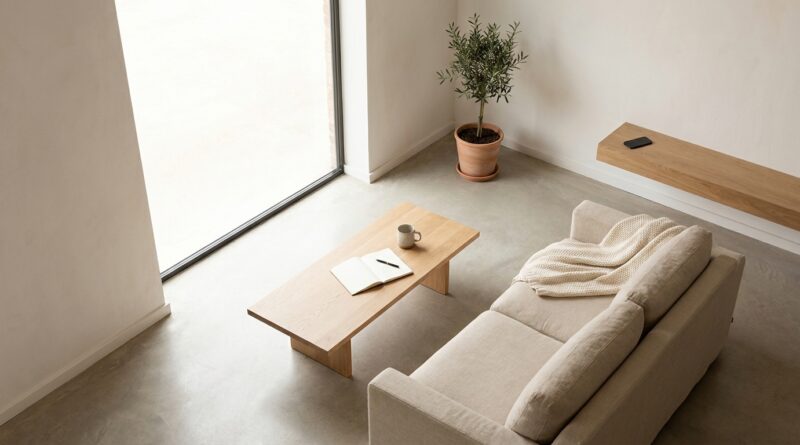
The 5-Pillar Productive Rest Day: A Minimalist Way To Get More Done By Fully Logging Off On Purpose
You finally get a day off, sit down with coffee, and within ten minutes your brain starts heckling you. You should answer that email. You should clean the kitchen. You should get ahead for Monday. So instead of truly resting, you do that weird modern thing where you “take it easy” with one eye on your inbox and the other on your to-do list. It does not feel like rest. It feels like being lightly chased all day. If that sounds familiar, you are not failing at downtime. You are trying to recover in a culture that treats being always available like a personality trait. A productive rest minimalist recovery day fixes that by making rest intentional, not accidental. The goal is not to earn your next work sprint by suffering less elegantly. The goal is to log off on purpose, recover deeply, and come back with a working brain instead of a smoked one.
⚡ In a Hurry? Key Takeaways
- A productive rest day is not lazy. It is a planned recovery day that helps you think better and work better later.
- Use five simple pillars: stop input, lower decisions, move gently, rest your mind, and close the day on purpose.
- You do not need apps, trackers, or a perfect schedule. You just need a few clear boundaries and permission to follow them.
Why “half-resting” leaves you more tired
Most people are not bad at resting because they lack discipline. They are bad at resting because they never fully stop.
The phone stays nearby. Notifications stay on. Work thoughts keep sneaking in. Even leisure turns into a project. Watch the right show. Read the smart book. Meal prep. Optimize. Improve.
Your body may be on the couch, but your nervous system is still at work.
That is why a real rest day needs structure. Not a rigid schedule. Just enough shape that your brain gets the message: we are safe, nothing is due right now, and we can power down.
If this sounds familiar during your workweek too, you would probably like The 5-Pillar Brain-First Workday: A Minimalist Way To Fix Your Focus By Protecting Your Head, Not Your Inbox. It makes the same point from the other side. Better focus does not start with squeezing harder. It starts with protecting the brain that does the work.
What a productive rest minimalist recovery day actually means
It does not mean doing nothing all day unless that truly helps you.
It means choosing activities that give more energy back than they take. It means reducing the stuff that keeps your brain switched on. It means dropping the performance mindset for one day so your system can settle.
A good rest day should leave you feeling clearer on Sunday night, not panicked because you “wasted” the day.
The 5 pillars of a real rest day
1. Cut the input
Rest gets harder when your brain is still processing a hundred tiny signals. News, Slack, texts, shopping tabs, social feeds, even harmless-seeming YouTube rabbit holes all count as input.
For one day, lower the noise.
That can mean:
- Putting your phone on Do Not Disturb
- Logging out of work apps
- Not checking email “just once”
- Skipping the news for a day
- Choosing one form of entertainment instead of seven open tabs
This is often the hardest pillar because input feels passive. It is not. Processing is work.
2. Lower the number of decisions
Decision fatigue is sneaky. It is not just big life choices. It is also the constant drip of little ones. What should I wear. What should I cook. Should I go out. Should I make the day useful. Should I start that task now.
A minimalist recovery day works better when you pre-decide a few things.
Try this the night before:
- Pick simple meals
- Choose one or two places you might go, like a park or cafe
- Write down any work task that is nagging you, then tell yourself it is parked until tomorrow
- Set one gentle intention, like “today is for calming down”
The fewer choices you force your brain to make, the more room it has to recover.
3. Move, but do not train
Movement helps. Punishing yourself does not.
On a rest day, the best kind of movement usually feels easy and slightly boring. A walk. Stretching. Slow biking. Light gardening. Tidying one small space if that genuinely calms you.
The goal is not gains. The goal is regulation.
If your usual instinct is to turn everything into a challenge, this pillar may be your reality check. You do not need to “win” your rest day. You need to let your body exhale.
4. Give your mind one deep exhale
This is the pillar most people skip. They stop working, but they never let the mind settle.
Pick one activity that absorbs you without draining you. Reading a paper book. Sitting outside. A long bath. Listening to music without also scrolling. Napping. Cooking something simple. Doing a hobby badly and happily.
Notice the pattern here. Nothing is being monetized. Nothing is being turned into content. Nothing needs to become progress.
That is the point.
5. End the day with a soft reset
Many rest days get ruined at 8 p.m. when the Sunday scaries show up early. Suddenly you are checking calendars, dreading the week, and mentally clocking back in.
Instead, close the day gently.
Try a ten-minute reset:
- Tidy one visible area
- Write down the top three things for tomorrow
- Set out what you need for the morning
- Stop there
You are not trying to get ahead. You are trying to reduce friction so tomorrow does not barge into tonight.
A sample minimalist rest day
If you want this to feel more real, here is a simple version you can copy this weekend.
Morning
- Keep your phone off for the first hour
- Eat something easy
- Take a walk without a podcast
Midday
- Do one low-effort enjoyable thing, like reading or sitting outside
- Eat a simple lunch
- Avoid errands unless they genuinely make life easier
Afternoon
- Take a nap, stretch, or do a hobby
- Stay off work platforms completely
- Let boredom happen for a bit
Evening
- Have a calm dinner
- Do a ten-minute reset for tomorrow
- Keep screens lighter if you can
That is it. Nothing fancy. That is why it works.
How to handle the guilt when it shows up
It probably will.
Guilt does not always mean you are doing something wrong. Sometimes it just means you are doing something unfamiliar.
When the “I should be productive” voice kicks in, answer it with something plain:
- Rest is part of the work cycle
- I am not behind because I paused
- Doing less today helps me do better tomorrow
You do not have to turn this into a grand wellness ritual. You are just teaching your brain that stopping is allowed.
What to avoid on a recovery day
Some things look restful but often are not.
- Doomscrolling for hours
- Checking work “just in case”
- Scheduling the whole day full of catch-up tasks
- Turning exercise into punishment
- Using rest time to compare your life to everyone else’s highlights
If an activity leaves you more tense, more scattered, or oddly ashamed, it probably is not helping you recover.
At a Glance: Comparison
| Feature/Aspect | Details | Verdict |
|---|---|---|
| Half-rest day | Some downtime, but constant phone checks, low-grade guilt, and unfinished mental work | Looks restful, rarely feels restorative |
| Productive rest minimalist recovery day | Lower input, fewer decisions, gentle movement, real mental rest, and a simple close to the day | Best option for deeper recovery and better focus later |
| “Catch-up” day disguised as rest | Errands, chores, email, admin, and productivity tasks dressed up as self-care | Useful sometimes, but not a true recovery day |
Conclusion
Right now, a lot of people are quietly cooked. Always on. Always reachable. Slightly afraid that if they slow down, everything will slide off the rails. But rest is not the opposite of productivity anymore. It is the support beam under it. If you try this five-pillar approach, you are not being lazy or falling behind. You are giving your brain and body a real chance to recover. No new gear. No subscription. No app to track your calm. Just one intentional day with less input, less pressure, and more actual rest. Try it this weekend. Then notice the before and after. Less anxiety. Deeper recovery. Better focus when you step back into work. That is not indulgence. That is maintenance for a human being.