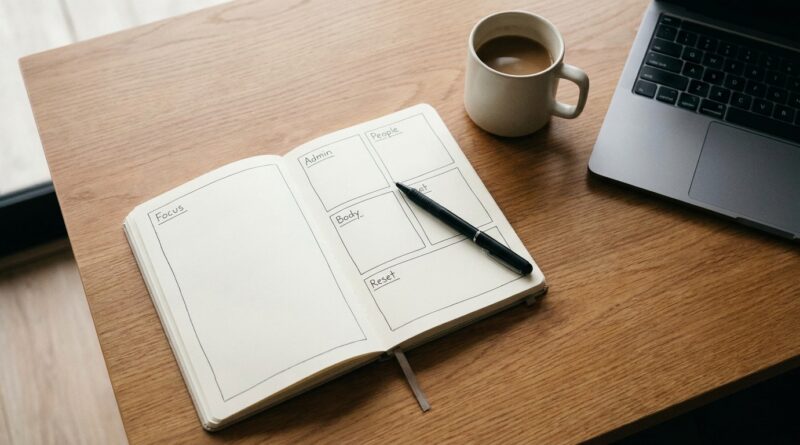
The 5‑Pillar One‑List Life: A Minimalist Way To Stop Drowning In Tasks By Letting One Page Run Your Day
Your tasks are everywhere. A note on your phone. A starred email. A Slack message you meant to come back to. A paper list in the kitchen. A Notion setup that looked promising for two days, then quietly turned into another guilt machine. That kind of scattered system is exhausting, not because you are disorganized, but because you are being asked to remember where your life is stored. A one page minimalist productivity system fixes that by giving your day one home. Not ten. One.
The idea is simple. Instead of building a giant life dashboard, you run your day from a single page split into five small pillars. Each pillar has a job. Together, they hold work, life admin, personal care, and the loose ends that usually slip through the cracks. It is not fancy. That is the point. When a system is small enough to trust, you actually use it. And when you use it, your brain gets to stop tab-switching and start finishing things.
⚡ In a Hurry? Key Takeaways
- A one page minimalist productivity system puts your whole day on a single sheet divided into five clear areas, so you stop hunting across apps and notes.
- Start with just today. Write no more than 3 key work tasks, 3 life admin tasks, and a short parking lot for anything that can wait.
- The goal is relief, not perfection. If your page feels crowded, your day is crowded. That is useful information, not failure.
Why one page works better than another app
Most people do not have a motivation problem. They have a fragmentation problem.
Every tool promises clarity, but many of them create one more inbox to maintain. You end up doing light admin on your own productivity system. That is a bad trade.
A one page minimalist productivity system works because it reduces decision fatigue. There is one place to look. One place to update. One place to end the day.
It also does something sneaky and helpful. It forces limits. A page can only hold so much. That means it gently pushes you to choose what matters now, instead of carrying your entire life like a backpack full of bricks.
The 5 pillars that run the page
You can draw this on paper, make it in a notes app, or print a simple template. The format matters less than the rule. It must fit on one page without scrolling into next week.
1. Must Do
This is the tiny list of things that would make today count.
Not twenty items. Usually two to five. If you finish these, the day was not wasted. That sounds obvious, but many people never define what a “good day” actually is. Then they feel behind no matter what they get done.
2. Should Do
These are useful, important, but not urgent enough to sit in the top box.
Think of this as your optional second gear. If you have energy after the must-do list, you pull from here. If not, nothing breaks.
3. Life Admin
This pillar is where bills, forms, appointment calls, school messages, returns, refills, and all the little domestic gremlins live.
People often mix these with work tasks and then wonder why the list feels endless. Separating life admin makes it visible without letting it eat the whole page.
4. Care and Maintenance
This is the pillar most systems ignore, which is funny because your brain and body are the hardware running the whole thing.
Add meals, water, a walk, meds, a stretch, reading, or an early night. Not as decoration. As real tasks. If your day never includes maintenance, burnout is not some mystery event. It is just the bill arriving late.
This is also where your environment can help or hurt. If your workspace leaves you drained by lunchtime, it is worth reading The 5‑Pillar Minimalist Lighting Workday: A Simple Way To Fix Your Focus Without Buying More Gear. Small physical tweaks often make your list feel more doable.
5. Parking Lot
This is the pressure release valve.
Ideas, reminders, “ask Sam about that thing,” books to buy, projects for next month, random worries. They go here so your brain can let go without losing them.
The parking lot is not today’s to-do list. It is storage. Treating it that way is what keeps your page calm instead of chaotic.
What a real page might look like
Here is a simple example.
Must Do
Finish client proposal
Book dentist appointment
Send rent payment
Should Do
Clear 20 emails
Outline blog post
Order printer ink
Life Admin
Reply to school form
Refill prescription
Take recycling out
Care and Maintenance
Lunch away from desk
15-minute walk
In bed by 11
Parking Lot
Research holiday dates
Ask boss about training budget
Fix loose cabinet handle
That is it. No tags. No automations. No “second brain.” Just a page that knows what today is for.
How to set it up tonight in 10 minutes
Step 1: Gather everything
Open your email, notes app, calendar, messages, and any scraps of paper. Pull the tasks out. Do not organize yet. Just collect.
Step 2: Pick today’s must-do items
Choose the few things that matter most. Be honest. If your must-do list has twelve items, it is not a must-do list. It is a wish list.
Step 3: Sort the rest into the other pillars
Life admin goes in its lane. Self-care goes in its lane. Loose thoughts go in the parking lot. This separation matters more than people think.
Step 4: Stop when the page is full
If the page cannot hold it all, your day cannot hold it all either.
That is not bad news. That is clarity.
Step 5: Make a fresh page tomorrow
Carry over only what still matters. This keeps stale guilt from breeding in the background.
Common mistakes that turn a simple system into a mess
Making every task equal
“Email accountant” and “choose paint colors for someday” should not compete for the same level of attention. The five pillars help you stop doing that.
Using the parking lot as a secret to-do list
If you keep promoting everything into today, the page loses its power. Let some things wait.
Trying to manage your whole future
This is a daily page, not a complete life archive. If you need a master list for longer projects, keep one. Just do not run your day from it.
Overdesigning the template
If you spend more time decorating the system than using it, you have drifted back into productivity as a hobby.
Paper or digital?
Both can work.
Paper is fast, visible, and hard to overcomplicate. It is great for people who want less screen time and fewer settings to fiddle with.
Digital is handy if your work already lives on a computer, or if you need easy copy and paste. A basic note is enough. You do not need a giant workspace full of widgets.
The best version is the one you will still use on a tired Wednesday.
Who this system is best for
This approach is especially good for people who feel mentally crowded.
If you are juggling work, family admin, errands, health, and a constant stream of little reminders, one page can feel weirdly calming. It gives each category a seat at the table without letting one take over the room.
It is also good for people who are quietly done with bloated systems. If your current setup has become another source of stress, simpler is not lazy. It is smart.
What this system will not do
It will not create extra hours.
It will not make every day smooth.
It will not magically remove hard decisions about priorities, deadlines, or rest.
What it will do is show you the truth of your day in one glance. That is often enough to lower the panic and help you move with more intention.
At a Glance: Comparison
| Feature/Aspect | Details | Verdict |
|---|---|---|
| Setup time | A five-pillar page takes minutes to make with pen and paper or a plain notes app. | Fast and low-friction |
| Mental load | You check one page instead of bouncing between email, chat, sticky notes, and dashboards. | Excellent for reducing overwhelm |
| Long-term planning | It is best for running today. Bigger projects may still need a separate simple master list. | Strong daily system, light on big-picture storage |
Conclusion
There is a reason people are backing away from giant productivity stacks. Most of us do not need a more optimized life. We need a more usable one. A one page minimalist productivity system meets that moment nicely. It cuts app fatigue, gives you a real sense of finishing something today, and makes room for work, life admin, and rest on the same sheet. Best of all, it is small enough to try tonight. Draw five boxes. Fill them honestly. See how tomorrow feels when your day has one home instead of twelve.