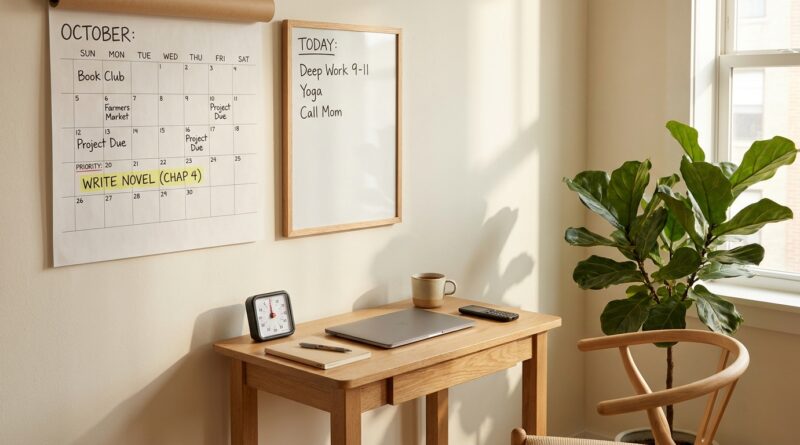
The 5‑Pillar Offline-First Day: A Minimalist Way To Get More Done Without Adding Another App
You do not need another productivity app. That is the part nobody says out loud. If your calendar, task list, notes, and reminders all live on the same phone that keeps pulling you into messages, shopping tabs, and bad news, your system is not broken because you lack features. It is broken because your focus keeps sharing a room with your distractions. That gets exhausting fast. Plenty of people trying to simplify their digital lives end up doing the opposite. They delete one noisy app, then install three calmer-looking ones that still demand attention. An offline first minimalist productivity routine is a different idea. It does not reject technology. It simply puts your most important decisions somewhere quieter first. Think paper notebook, printed plan, local files, and set check-in times. The goal is not to become a hermit. The goal is to make your tools behave, so your day stops feeling like a series of interruptions dressed up as organization.
⚡ In a Hurry? Key Takeaways
- An offline-first routine works by moving your key planning, task capture, and focus blocks away from the internet by default.
- Start with five simple pillars: paper planning, one capture spot, offline work blocks, scheduled online windows, and a daily shutdown review.
- You do not need to quit tech. You just need fewer moving parts and clearer boundaries between work and distraction.
Why offline first feels better than “more organized”
A lot of modern productivity systems look neat on the surface. Color-coded calendars. Smart reminders. Habit trackers. Sync across six devices. Then real life happens.
You pick up your phone to check one task. Ten minutes later you are reading a group chat, clearing spam, and wondering why your brain feels so scattered. That is not a discipline problem. It is a design problem.
An offline-first setup fixes that by making your default mode calmer. Important things live somewhere that cannot buzz at you. You still go online when needed, but it is a deliberate step, not the background condition of your whole day.
If your mornings are especially vulnerable, this pairs well with The 5‑Window Morning: A Minimalist Way To Reset Your Brain Before The World Grabs It. The basic idea is the same. Protect your attention before the world starts making claims on it.
The 5 pillars of an offline first minimalist productivity routine
1. One analog command center
This is your home base. Usually a paper notebook, planner, or a single printed daily sheet.
It should hold only three things:
- Your top 1 to 3 priorities for the day
- Any fixed appointments you cannot miss
- A short list of personal admin or errands
That is it. Not your whole life. Not twenty categories. Just the things that matter today.
Why paper? Because paper does not tempt you to “just quickly check” anything else. It sits there quietly and waits. That calm matters more than people think.
2. One capture spot for everything
Your brain is bad at storing loose ends. It is good at creating them.
So you need one place to catch random tasks, ideas, reminders, and follow-ups. This can also be paper, like an inbox page in your notebook. If you truly need digital capture because you are out and about, use the simplest tool possible, like a plain note saved locally on your phone.
The rule is simple. Capture now, sort later.
Do not organize every idea the second it appears. That is how a two-minute note turns into a thirty-minute “system improvement session.”
3. Offline work blocks
This is the heart of the routine. You choose one or more chunks of time when your main work happens with the internet off, or at least out of reach.
That might mean:
- Writing in a local document with Wi-Fi turned off
- Reading printed material instead of browser tabs
- Doing deep planning with notebook and pen first
- Using focus mode and putting the phone in another room
For many people, 45 to 90 minutes works well. Long enough to think clearly. Short enough to feel doable.
If your job requires internet access, go “offline first” inside the block. Close inboxes. Turn off chat. Open only the one tool needed for the task. The point is not technical purity. The point is fewer entrances for interruption.
4. Scheduled online windows
Most people do not need constant access to email, messaging apps, and news feeds. They need reliable access at sensible times.
Try two or three online windows a day. For example:
- 11:00 a.m. for email and team replies
- 2:30 p.m. for research or admin
- 4:30 p.m. for final follow-ups and tomorrow prep
This removes a huge amount of mental drag. Instead of deciding every ten minutes whether to check something, you already know when you will check it.
That is what cuts decision fatigue. You stop negotiating with your devices all day long.
5. A five-minute shutdown review
Minimalist systems fail when they do not close the loop.
At the end of the day, spend five minutes doing three things:
- Mark what got done
- Move unfinished items to tomorrow or a later date
- Write tomorrow’s top priority before you stop working
This tiny habit is what keeps your offline-first routine from becoming a pile of loose paper and good intentions. It gives your brain a clean handoff into the next day.
How to set this up without buying anything
You can build the whole system with stuff you probably already have.
The minimalist version
- One notebook or legal pad
- One pen you actually like using
- Your existing calendar, checked at set times
- A folder on your computer for local work files
- Phone focus mode or airplane mode during work blocks
That is enough.
The slightly more structured version
- Printed weekly plan
- Daily index card with top three tasks
- Small capture notebook in your bag
- Desktop timer for focus sessions
- Printed reference material for recurring work
Notice what is missing. No subscriptions. No account creation. No migration project.
What this routine looks like in a normal workday
Let’s make it real.
You start the morning by checking your paper plan, not your notifications. You write today’s top three tasks. You glance at your calendar for hard time commitments, then put the phone down.
From 8:30 to 10:00, you do one offline work block. Maybe that is writing, budgeting, design work, or careful reading. No inbox. No chat bubbles.
At 10:30 or 11:00, you open your online window. You answer messages, pull needed files, confirm appointments, and handle things that truly require connection.
Then you close it again.
Later in the day, you do another focused block, another short online check, and a five-minute shutdown review. That is the system.
Simple systems often look too simple, right up until they start saving your sanity.
Common worries, and the honest answer
“My work is too digital for this.”
Probably not. Most digital jobs still include a lot of thinking, drafting, outlining, reviewing, and prioritizing. Those can begin offline, even if the final output ends up online.
“I’ll miss something urgent.”
Maybe, but less often than you think. Real emergencies are rare. Constant low-grade interruption feels urgent, but usually is not. If needed, keep one emergency contact method available and mute the rest.
“Paper sounds messy.”
Paper gets messy when it becomes a storage warehouse. Keep it lean. One notebook. One daily page. One capture list. Minimal paper is easier to maintain than bloated apps.
“I know myself. I’ll drift back to my phone.”
Of course you will sometimes. Everybody does. Build friction. Put the phone in another room. Log out of distracting sites. Turn off Wi-Fi for certain tasks. Make the better choice easier than the noisy one.
Who this works best for
This routine is especially good for:
- People who feel “organized” but still distracted
- Remote workers tired of living inside chat apps
- Freelancers and creatives who need deep focus
- Anyone trying to cut subscriptions and screen time
- People who want digital minimalism without going fully analog
It may be less useful if your role truly requires live response all day, like certain support or operations jobs. Even then, pieces of it still help. A paper daily plan and a shutdown review are useful almost anywhere.
How to try it for one week
Do not overhaul your life on Monday morning. Test it like a normal person.
Day 1 setup
- Pick one notebook
- Write your top three tasks each morning
- Choose one 60-minute offline work block
- Set two times to check email or messages
- End the day with a five-minute review
What to measure
- How often you switched tasks
- How mentally tired you felt by lunch
- Whether important work got finished earlier
- How often you checked your phone without meaning to
You are not looking for perfection. You are looking for a noticeable drop in friction.
At a Glance: Comparison
| Feature/Aspect | Details | Verdict |
|---|---|---|
| Planning | Paper notebook or printed daily sheet for top priorities and appointments | Best for focus, because it keeps planning away from distractions |
| Task management | One capture spot, processed at set times instead of all day | Cuts mental clutter without needing another app |
| Online access | Email, chat, and research handled in scheduled windows | Most realistic way to stay connected without staying distracted |
Conclusion
The appeal of an offline first minimalist productivity routine is not nostalgia. It is relief. Right now, a lot of people want digital minimalism but keep collecting more tools, more tabs, and more subscriptions in the name of getting organized. After a while, that starts to feel silly. Replacing social media with five productivity apps is still a kind of clutter. A five-pillar routine gives you a practical middle path. Fewer moving parts. Less decision fatigue. More room for real concentration. You do not have to move to a cabin or swear off modern life. You can stay online, stay busy, and still build a workday where tech acts like a quiet tool instead of a constant temptation. That is the real win. Not doing everything on paper forever, but creating enough distance from the noise that your attention belongs to you again.