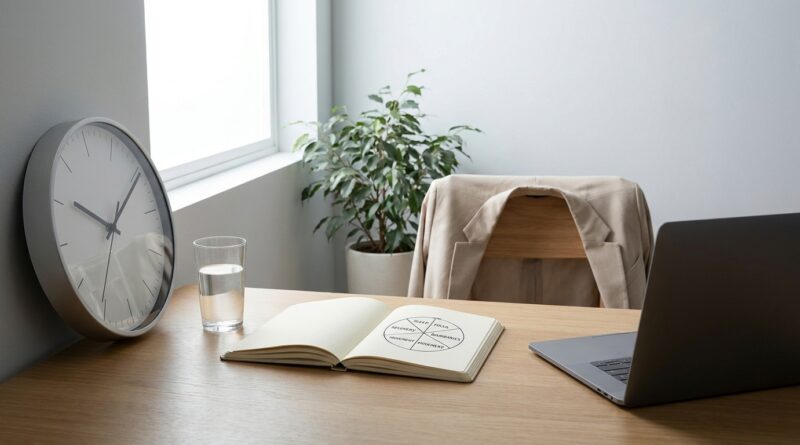
The 5-Pillar Energy-Light Day: A Minimalist Way To Get More Done Without Burning Out
You do not need another app telling you to wake up at 5 a.m., track 14 habits, and turn your life into a spreadsheet. Most people already know the basics. Sleep more. Eat better. Move your body. Put the phone down. The problem is not a lack of advice. It is that a lot of us are trying to get through the day on fumes. You wake up tired, burn your best attention on notifications, and then hit 3 p.m. feeling like your brain has been stirred with a stick. That is not laziness. That is low fuel. A minimalist energy management for productivity approach starts from a more honest place. Stop asking, “How can I squeeze more out of myself?” Start asking, “How can I waste less energy?” That shift matters. It is gentler, more practical, and a lot easier to stick with when real life is messy.
⚡ In a Hurry? Key Takeaways
- A better day often comes from protecting your energy, not packing in more tasks.
- Use five simple pillars: sleep, light, food and water, movement, and attention boundaries.
- If you feel wiped out all the time, this framework can help, but ongoing fatigue is still worth discussing with a doctor.
The Core Idea: Run Your Day Like a Phone Battery
Think about how you treat your phone when it is at 30 percent. You do not start a giant software update, max the screen brightness, and stream video for three hours. You get a bit more careful. You close a few apps. You turn off what you do not need.
Your brain is not that different.
The trouble is that many productivity systems assume you are always starting at 100 percent. Most people are not. They are starting half-tired, half-distracted, and already a little behind. So the smart move is not a complicated life overhaul. It is building a day that leaks less energy.
That is where this five-pillar setup helps. It keeps things simple enough to use on an ordinary Tuesday.
Pillar 1: Protect Sleep Like It Pays You
Because, in a way, it does.
Bad sleep makes everything cost more. Simple emails feel harder. Small problems feel bigger. You need more caffeine to feel normal. You make poorer choices, then wonder why the day went sideways.
What to do
Pick one sleep anchor, not five. The easiest one is a consistent wake-up time. Even if bedtime slides a little, getting up at roughly the same time helps your body settle.
Then make the last 30 minutes before sleep boring on purpose. Dim lights. Put the phone away if you can. If not, at least stop feeding your brain drama, work chat, and algorithm sludge.
Minimal version
If your sleep is a mess, do not try to become a wellness monk overnight. Just start here:
- Wake up within the same 30-minute window most days.
- Cut one round of late-night scrolling.
- Keep caffeine earlier in the day.
That alone can make the next day feel less expensive.
Pillar 2: Use Light to Tell Your Brain What Time It Is
This one sounds small. It is not.
Morning light helps set your internal clock. It can help you feel more awake earlier and sleepy at a more useful time later. Indoor lighting, especially in winter or in home offices, is often too weak to do much.
What to do
Get outside for 5 to 10 minutes in the morning if possible. Longer is great, but do not turn this into homework. Stand on the porch. Walk to the corner. Drink your coffee near a bright window if the weather is awful.
At night, go the other direction. Lower bright overhead lights. Your brain likes clear signals. Bright when it is time to be alert. Dim when it is time to wind down.
Why it helps productivity
Because energy is not just about motivation. It is also timing. When your body clock is out of sync, your attention gets patchy. You feel “off” and often blame yourself. Sometimes the problem is simpler than that.
Pillar 3: Stop Creating Food and Water Emergencies
A shocking number of “I cannot focus” afternoons are really “I had coffee, stress, and half a granola bar.”
Your brain is needy. It wants steady fuel and enough fluids to do its job. It does not need a perfect meal plan. It needs fewer crashes.
What to do
Eat something with protein and fiber earlier than you think you need to. Keep water within reach. If you are deep into work, make lunch easy enough that you will actually eat it instead of negotiating with yourself until 2:30.
Minimal version
- Drink a glass of water in the first hour of the day.
- Have a real breakfast or an early snack with protein.
- Do not let lunch become an afterthought.
This is not glamorous advice. It works anyway.
Pillar 4: Use Movement as a Reset, Not a Fitness Test
Many people hear “move more” and immediately picture a punishing workout they do not have time for. That is not the point here.
Movement is one of the fastest ways to wake up your brain, lower stress, and break the weird trance that comes from sitting too long.
What to do
Take short movement breaks before you feel desperate. A 5-minute walk, a flight of stairs, a few stretches, even standing during a call can help. The goal is not athletic glory. The goal is keeping your system from getting sticky and sluggish.
Best times to use it
- Before starting focused work
- After lunch, when energy dips
- When you are anxious and circling the same task
If your workday is also loud and distracting, pair this with the ideas in The 5‑Pillar Noise-Light Workday: A Minimalist Way To Stay Focused In A Loud World. Noise drains energy too. A lot of what feels like low motivation is really sensory overload.
Pillar 5: Put Boundaries Around Attention
This is the big one.
Most people are not just physically tired. They are attention-tired. Their mind has been chopped into tiny pieces by pings, tabs, group chats, headlines, and the irresistible urge to check one little thing.
Every switch costs energy. Not a dramatic amount. But enough to leave you foggy by mid-afternoon.
What to do
Create small zones of protected attention.
- Put your phone out of reach for 25 minutes.
- Close tabs you are not using.
- Check email at set times instead of living in it.
- Do your hardest task before the internet gets first bite.
You do not need monk-level discipline. You need fewer open loops.
A useful rule
Do not spend your best energy on other people’s priorities. If your freshest hour disappears into messages and admin, the rest of the day often feels oddly flat.
How to Put the 5 Pillars Into a Real Day
Here is a simple version that does not require a personality transplant.
Morning
- Wake up at a roughly consistent time.
- Get light in your eyes. Outside if you can.
- Drink water.
- Eat something that is not just sugar and hope.
- Start with one meaningful task before checking everything.
Midday
- Take a short walk or movement break.
- Eat lunch before you crash.
- Do not stack meetings on top of hunger and dehydration.
Afternoon
- Expect some dip. That is normal.
- Use lighter work if your brain is slower.
- Step away from the screen for a few minutes instead of doom-scrolling for 20.
Evening
- Lower the stimulation a bit.
- Reduce bright light and work chatter late at night.
- Give tomorrow a better starting point.
What This Is Not
This is not a cure-all. It is not a moral test. It is not one more system for judging yourself because you got sleepy at 2:47 p.m.
It is a practical framework for reducing avoidable energy loss.
Also, if you are deeply tired all the time, snore heavily, wake up exhausted, or feel like your battery never charges no matter what you do, it is smart to check in with a medical professional. Burnout, sleep apnea, iron issues, depression, anxiety, and other health problems can all look like “I just need better habits.” Sometimes the answer is bigger than productivity advice.
Why Minimal Works Better Than Maximal
Because when you are already worn down, complex systems become one more thing to fail at.
Minimal systems have a few advantages:
- They are easier to remember.
- They work even on bad days.
- They focus on what gives the biggest return.
- They create stability instead of guilt.
That is the heart of minimalist energy management for productivity. You are not trying to optimize every minute. You are trying to stop the day from chewing through your limited fuel.
At a Glance: Comparison
| Feature/Aspect | Details | Verdict |
|---|---|---|
| Traditional time management | Focuses on fitting more tasks into the day, often assuming you have steady mental fuel from morning to night. | Useful for planning, but weak when you are already drained. |
| Minimalist energy management | Focuses on protecting sleep, light exposure, food and water, movement, and attention so your brain has more usable energy. | Best for sustainable productivity and fewer afternoon crashes. |
| All-or-nothing self-improvement | Demands major routine changes, lots of tracking, and high willpower right away. | Usually burns people out faster than it helps. |
Conclusion
You do not need to become a perfectly optimized human to feel better and get more done. You just need to stop treating energy like an unlimited resource. Right now, the productivity conversation is finally moving in the right direction. Away from squeezing every minute. Toward protecting the human being living inside the calendar. If you are waking up tired, scrolling before work, and wondering why your brain turns to soup by mid-afternoon, this kind of minimalist framework gives you something useful right now. Five small levers. Better sleep habits. More morning light. Steadier fuel. A little movement. Fewer attacks on your attention. None of it is preachy. None of it requires buying more tools. It simply respects the real limit most people are dealing with in 2026, which is not information. It is capacity. Protect that, and the rest of your day usually gets a lot easier.