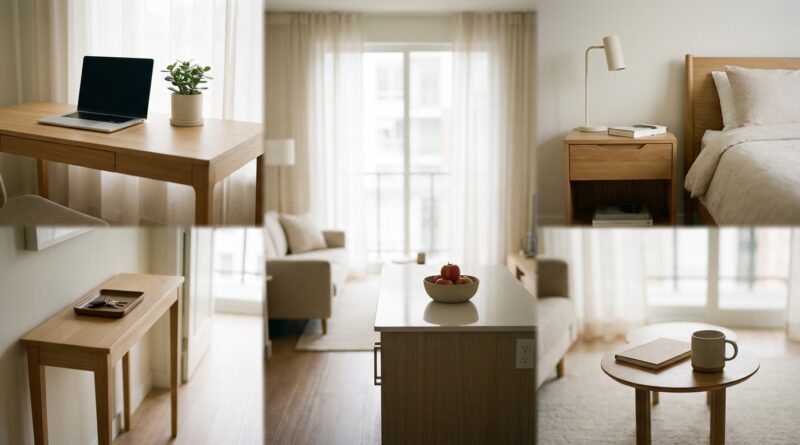
The 5‑Surface Home: A Minimalist Way To Turn Cluttered Spaces Into Quiet Focus Zones
You can feel it before you even open your laptop. The kitchen counter is full of post, chargers and half-finished errands. The dining table looks like a holding pen for life. The bedside shelf has become a mini storage unit. It is no wonder you feel tired before the day properly starts. Visual clutter is not just messy. It keeps asking your brain to notice, remember and decide.
The good news is you do not need a full home makeover, fancy storage bins or a weekend of ruthless decluttering. A better fix is smaller and far more realistic. Pick five surfaces you use every day, clear them with purpose, and give each one a single job. That is the whole idea behind minimalist home productivity pillars. You are not trying to make your home look like a showroom. You are building a few calm, reliable spots that help your mind settle down and get on with living.
⚡ In a Hurry? Key Takeaways
- A five-surface reset means choosing your most-used flat areas and giving each one a clear, limited purpose.
- Start with the kitchen counter, bedside table, desk, dining table and entry surface. Clear first, then add back only what supports that surface’s job.
- This is about lowering stress, not chasing perfection. The goal is less visual noise and fewer daily decisions.
Why flat surfaces quietly drain your energy
Flat surfaces attract everything. That is their talent and their curse.
A clear shelf says, “set it here for now,” and suddenly “for now” becomes three weeks. A table starts as a place to eat, then turns into a paperwork station, shopping dump and charging bay. Each object may look harmless on its own. Together, they create background stress.
Your brain does not see a pile and think, “That is neutral.” It sees open loops. Things to sort. Things to finish. Things to move. Things you forgot.
That is why people can spend money on planners, calendars and focus apps, then still feel scattered at home. The physical space keeps interrupting them.
What the 5-surface home actually is
The 5-surface home is a simple reset. You choose five flat surfaces that shape your day the most. Then you turn them into quiet focus zones.
Think of them as minimalist home productivity pillars. They support your routine without asking for constant attention.
Each surface gets one main role. Not five. One.
The basic rule
If an item does not help that surface do its job, it does not live there.
That sounds strict, but it is actually freeing. You stop negotiating with every random object.
The five surfaces most homes should start with
You can adjust this list for your space, but for most people these are the pressure points.
1. The kitchen counter
This is often the biggest stress magnet in the house. It collects groceries, letters, water bottles, cords and things you were “about to put away.”
Give it one purpose. Food prep.
Keep only what earns its place every day, such as a kettle, coffee machine or fruit bowl if you truly use them. Everything else should move.
A calm kitchen counter changes mornings fast. You can make breakfast without first moving six unrelated items.
2. The dining table
If your dining table has become a life raft for clutter, you are not alone.
Its job should be easy to name. Eat. Talk. Work, if you truly have no desk. But pick one main use.
If it has to do double duty, use a tray or basket for temporary work items so the table can return to neutral quickly.
3. Your desk or main work surface
This is the place where visual noise most directly steals focus.
Keep the essentials. Laptop. Lamp. Notebook. Maybe one small item you like looking at.
Not ten pens. Not old cups. Not unopened post. A desk should help you start work, not delay it.
If you like system-based routines, this pairs well with The 5‑Pillar ‘Calm Systems’ Day: Build Tiny Routines That Quiet Your Life And Run On Autopilot. The best routines often fail because the surface where they happen is doing too many jobs at once.
4. The bedside table
This one matters more than people think. The last thing you see at night and the first thing you see in the morning affects your mood.
Its job is rest.
Keep it simple. A lamp. A book. Glasses. Water. Maybe a charger if needed. Remove the receipts, tangled cables, old mugs and random bits that make your bedroom feel unfinished.
5. The entryway surface
This might be a hallway shelf, a console table or even a small section of counter near the door.
Its job is transition.
Keys, wallet, bag and maybe post that needs immediate action. That is it. When this surface works, leaving the house feels smoother and coming home feels less chaotic.
How to do the reset in one evening
You do not need to empty every cupboard. You just need a short, focused pass.
Step 1. Pick your five
Walk through your home and choose the five surfaces that affect your day the most. Not the ones guests see. The ones you see.
Step 2. Clear each surface completely
Yes, completely.
This helps you see what was really there and breaks the habit of shuffling things around. Put everything in a box or on the floor nearby while you decide.
Step 3. Assign one job to each surface
Say it out loud if that helps. “This counter is for food prep.” “This table is for dinner.” “This shelf is for keys and bag.”
If you cannot name the job in a short sentence, the surface is probably doing too much.
Step 4. Add back only the essentials
Return only the items that support that one job.
This is the key move. Most clutter comes back because we clear space without changing the rule for what belongs there.
Step 5. Create a tiny catch-and-release habit
Once a day, do a two-minute scan. Remove anything that landed there by accident.
That is enough to keep the system alive. You do not need a dramatic nightly reset.
What to do with the stuff you remove
This is where many resets stall. You clear the surfaces, then make five messy piles somewhere else.
Use three simple categories.
Put away
Items that already have a home. Be honest and actually return them.
Relocate
Items that belong in the house but not on that surface. Give them a better spot.
Decide later
If you hit a few awkward items, place them in one temporary box. Limit yourself to one box. Revisit it at the end of the week.
This keeps the reset moving without dragging you into a full decluttering marathon.
Why this works better than trying to organize everything
Whole-home organizing is exhausting. It asks for too many decisions at once.
The five-surface method works because it targets the areas with the highest mental traffic. These are the places your eyes and hands visit every day. Small changes there create a bigger sense of calm than reorganizing a cupboard you open twice a month.
It also respects real life. You are not aiming for spotless. You are reducing friction.
Common mistakes that make the reset fail
Giving a surface too many jobs
A table cannot be your office, snack station, family inbox and craft zone without becoming stressful.
Using surfaces as storage
Open storage sounds convenient, but often it is just delayed decision-making in plain sight.
Buying containers too soon
Storage products are not the first step. Rules are. Once the surface has a clear job, you may find you do not need extra gear at all.
Trying to fix the whole house in one go
Five surfaces is enough. More than that and you risk turning a helpful reset into another draining project.
How to keep your five surfaces calm long term
You do not need military discipline. You need light maintenance.
Attach a quick reset to something you already do. While the kettle boils, clear the counter. Before brushing your teeth, reset the bedside table. When you hang up your coat, check the entry shelf.
That is also why simple systems beat heroic effort. If you want that mindset in a broader way, The 5‑Pillar ‘Calm Systems’ Day is a useful companion read. The point is not to work harder. It is to make calm easier to repeat.
At a Glance: Comparison
| Feature/Aspect | Details | Verdict |
|---|---|---|
| Time required | One evening is usually enough to reset five high-use surfaces. | High reward for low time. |
| Stress reduction | Cuts visual noise in the places your brain notices most often. | One of the quickest ways to feel calmer at home. |
| Long-term upkeep | Needs short daily resets and clear rules for what belongs on each surface. | Very manageable if you keep each surface to one main purpose. |
Conclusion
If you are worn down by digital overwhelm and burnout, it makes sense to look beyond your phone settings and calendar. The room around you matters too. Counters, tables and shelves can either pull at your attention all day or quietly support it. A five-surface reset is realistic, fast and kind to your energy. In one evening, you can turn your most-used flat spaces into minimalist home productivity pillars that lower stress and bring back a bit of breathing room. Start with five. Keep the rules simple. Let your home help you focus again.