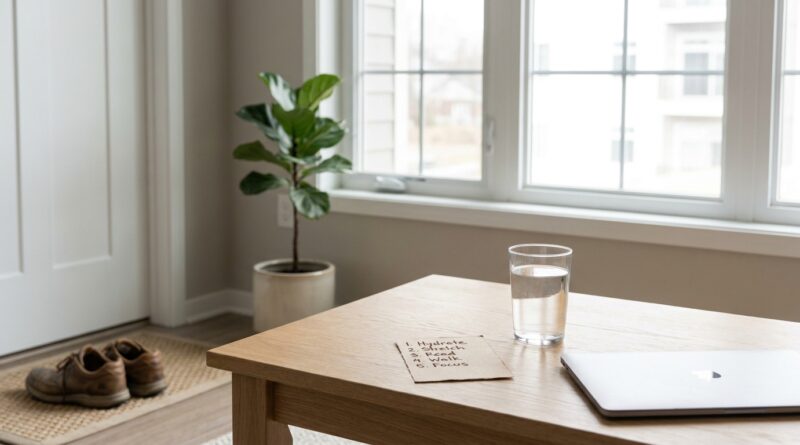
The 5‑Pillar Micro‑Habit Day: A Minimalist Way To Let Tiny Wins Run Your Life Instead Of Your Phone
Your phone is probably not ruining your life on purpose, but it is very good at eating your day in tiny bites. One notification here. One quick scroll there. By lunch, you have already made a hundred little decisions, your water glass is still full, your legs have barely moved, and the important thing you meant to do keeps getting pushed to “later.” That is frustrating because you already know the basics. Walk more. Sleep better. Drink water. Focus on one thing at a time. The problem is not knowing. The problem is trying to cram a full wellness makeover into a day that already feels packed. That is where a 5-pillar micro-habit day can help. Instead of building a perfect routine, you give yourself five tiny actions so small they fit into real life. Tiny wins do not look impressive online, but they do something better. They stick.
⚡ In a Hurry? Key Takeaways
- A minimalist daily micro habits for productivity system works best when each habit is tiny, clear, and tied to a moment you already have.
- Use five pillars only: move, hydrate, focus, breathe, and sleep. Start with a version so easy you cannot talk yourself out of it.
- If you feel wiped out or overwhelmed, this is meant to reduce pressure, not add guilt. Adjust the habit size to fit your real day.
Why big routines keep failing
Most people do not fail habits because they are lazy. They fail because the habit asks too much at the wrong time.
A full morning routine sounds nice until the dog needs walking, your inbox is on fire, the school run is late, or your brain is foggy before 9 a.m. Then the whole plan falls apart, and it feels like you failed before the day really started.
That is why minimalist daily micro habits for productivity make more sense for normal people. You are not trying to become a new person by Tuesday. You are building a small base layer that keeps you steadier, clearer, and less likely to hand your whole day over to your phone.
What the 5-pillar micro-habit day actually is
Think of it as five anchors for a messy modern day. Not five goals to crush. Five tiny actions that protect your energy and attention.
Pillar 1: Move
Your habit: Walk for 2 minutes.
That is it. Not 10,000 steps. Not a fitness tracker challenge. Just two minutes of movement, ideally after you have been sitting a while.
This matters because movement wakes up your body, breaks the “stuck at screen” feeling, and often resets your mood faster than people expect. Two minutes sounds almost silly, which is exactly why it works.
Pillar 2: Hydrate
Your habit: Drink a glass of water before your first coffee, or before lunch if mornings are chaos.
Many people spend half the day tired, snacky, or headachy and never stop to notice they are running on caffeine and dry air. One reliable glass of water will not turn you into a wellness guru, but it is a simple fix for a very common problem.
Pillar 3: Focus
Your habit: Do one task for 10 minutes with notifications off.
Single-tasking feels old-fashioned now, which is funny because it is still one of the best ways to get anything done. Pick one thing. Set a timer. Put the phone face down or in another room if you can.
Ten minutes is enough to start. And starting is usually the hard part.
Pillar 4: Breathe and pause
Your habit: Take 3 slow breaths before switching tasks.
This is the smallest habit here, and maybe the most underrated. Most of us do not move through the day. We slam into it. A short pause gives your brain a clean transition instead of constant mental spillover.
If that idea clicks with you, you might also like The 5‑Pause Day: A Minimalist Reset Ritual To Stop Burnout Before It Starts, which builds on this same less-pressure approach.
Pillar 5: Sleep setup
Your habit: Pick one tiny evening cue, like plugging your phone in outside the bedroom or dimming lights 30 minutes before bed.
Better sleep often starts long before your head hits the pillow. If your night is full of one-last-look scrolling, your brain never really gets the memo that the day is ending.
Do not try to perfect your whole bedtime. Just make the next night slightly easier.
Why this works better than “starting fresh on Monday”
Micro-habits work because they cut out drama.
You do not need motivation speeches. You do not need a new app. You do not need to become the sort of person who enjoys color-coded routine charts.
You just need habits that survive a normal Tuesday.
That is the key difference. Big plans depend on ideal conditions. Small habits can happen in traffic, between meetings, while the kettle boils, or before you pick up the kids. They are built for interruption, which means they are built for real life.
How to set up your day without turning it into a project
The secret is to attach each habit to something you already do. This is much easier than trying to remember five random tasks.
A simple example
After brushing teeth, drink water.
After your first meeting, walk for 2 minutes.
Before checking messages again, do 10 minutes of single-task work.
Before opening a new tab, take 3 slow breaths.
After dinner, put your phone on charge outside the bedroom.
Now your habits have a home. They are not floating around your brain all day asking to be remembered.
What to do when you miss a pillar
Nothing dramatic.
You are not trying to keep a perfect streak alive. You are trying to make good defaults easier than bad ones. If you miss a walk, walk later. If you forget water, drink it at lunch. If the whole day goes sideways, restart at the next obvious moment.
The biggest trap in self-improvement is the all-or-nothing mindset. Miss one piece, then scrap the whole thing. That is how tiny setbacks turn into three-week detours.
A better rule is this. Never miss twice if you can help it.
How your phone fits into all this
Your phone is not just a device. It is a habit machine.
It fills gaps. It offers quick relief. It rewards boredom with novelty. That is why beating screen time with willpower alone rarely works. You need replacement actions that are easier to do than opening another app.
A two-minute walk can replace a doom scroll. Three breaths can replace frantic tab-switching. Ten minutes of focused work can replace an hour of fake productivity where you answer pings but finish nothing.
The goal is not to become anti-phone. It is to stop letting your phone decide the shape of your day.
Who this system is best for
This setup is especially useful if you:
- feel constantly “on” but oddly unproductive
- get overwhelmed by detailed routines and trackers
- know the healthy basics but struggle to do them consistently
- want more energy without building your life around optimization
It is also a good starting point if you have been in a burnout loop where every new routine feels exciting for four days and exhausting after that.
At a Glance: Comparison
| Feature/Aspect | Details | Verdict |
|---|---|---|
| Time commitment | Each habit takes seconds or a few minutes, not a full routine block. | Easy to fit into busy days |
| Mental load | Five simple cues reduce decision fatigue and make healthy defaults easier. | Low stress and sustainable |
| Productivity payoff | Better focus, steadier energy, and fewer phone-led detours build up over time. | Small changes, real benefits |
Conclusion
The best part of a five-pillar micro-habit day is that it respects the life you already have. It does not ask you to wake up at 5 a.m., buy special gear, or track 19 metrics just to feel like you are trying. Right now the feeds are full of “life upgrade” advice that adds more to manage and more to feel bad about when you slip. Most people need the opposite. They need a minimalist, lifestyle-first way to work with a crowded day instead of fighting it. That is why these minimalist daily micro habits for productivity can be so useful. They take the healthiest ideas, like walking more, sleeping more consistently, drinking water, and doing one thing at a time, then shrink them into actions that are almost too small to fail. And that is the point. Tiny wins may not look dramatic, but they can build a calmer, steadier base of energy, focus, and mood that actually lasts.