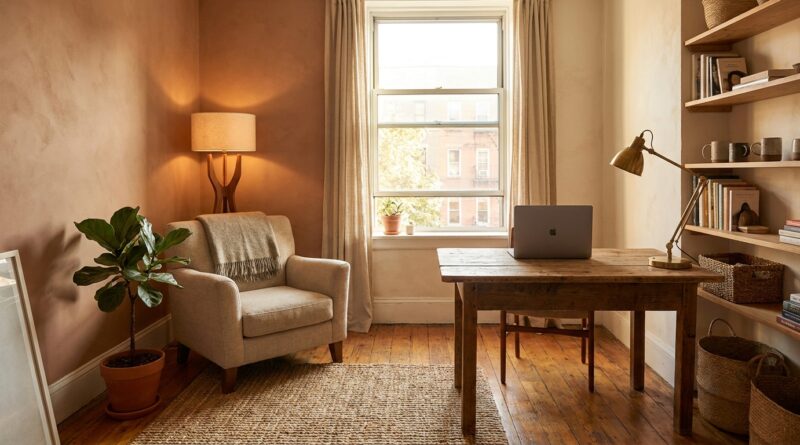
The 5‑Pillar Warm Minimalist Home: A Simple Way To Turn Your Space Into A Calm Productivity Engine
You can do all the “right” things. Clear the counters. Donate half the closet. Paint the walls a nice safe white. And still walk into your home feeling strangely tense. That is the part a lot of people do not say out loud. A space can be clutter-free and still feel mentally noisy. It can look polished online and still leave your brain tired in real life. A warm minimalist home for productivity fixes that gap. The goal is not less stuff for the sake of it. The goal is a home that helps you focus when you need to work, breathe when you need to rest, and move through the day with fewer tiny frictions. The good news is you do not need a full renovation or expensive designer furniture. You just need a simple framework. These five pillars make warm minimalism practical, room by room, even if you live in a small apartment or a busy family home.
⚡ In a Hurry? Key Takeaways
- Warm minimalism works best when you mix clear surfaces and simple layouts with soft textures, natural colors, and everyday comfort.
- Start with five pillars: edit visual noise, warm up materials, improve lighting, create function zones, and build easy reset habits.
- You do not need to buy everything new. Small changes like better lamps, baskets, curtains, and fewer visible items often make the biggest difference.
Why “clean” sometimes still feels stressful
A lot of minimalist advice accidentally creates homes that feel like waiting rooms. Everything is neat, but nothing feels lived in. That can look impressive. It does not always feel good.
Your eyes need calm. Your nervous system also needs warmth. If a room is too stark, too bright, or too empty, your brain may not read it as peaceful. It may read it as unfinished, cold, or oddly demanding.
That is why a warm minimalist home for productivity is catching on. It gives you structure without sterility. You keep the clarity of minimalism, but add enough softness and function that the space actually supports daily life.
The 5 pillars of a warm minimalist home for productivity
1. Reduce visual noise, not personality
This is the pillar most people know. But the trick is to edit with purpose. Do not remove everything. Remove what constantly asks for your attention.
Visual noise includes:
- Piles with no home
- Open shelves packed with small items
- Cords, packaging, and paper clutter
- Too many colors fighting each other
- Furniture that blocks movement
Start by standing in the doorway of a room. What grabs your eye first? If the answer is laundry, cables, random mail, or a crowded side table, that is where your focus is being drained.
Keep a few meaningful things visible. A ceramic bowl. A framed photo. A plant. A favorite lamp. Warm minimalism is not about making your home anonymous. It is about making the room easier to read.
If your desk is the main source of mental static, pair this with The 5‑Minute Hour Rule: A Minimalist Way To Stop Letting Your Desk Slowly Destroy Your Focus. It is a simple way to stop clutter from quietly building back up.
2. Add warmth through materials, not more stuff
When people try to make a room feel cozy, they often start buying decor. More pillows. More objects. More little accents. That can backfire fast.
Warm minimalism gets better results by changing materials first. Think texture before quantity.
Good options include:
- Wood tones instead of all metal or high-gloss finishes
- Linen or cotton curtains
- Wool or low-pile rugs
- Ceramic, rattan, stone, or woven storage
- Matte finishes instead of reflective ones
This matters because your brain reads texture as comfort. A room with one oak side table, soft curtains, and a textured throw often feels calmer than a room with ten decorative items in shiny white.
If you are unsure where to start, pick one natural material and repeat it gently through the room. Maybe light wood. Maybe woven baskets. Maybe brushed linen. That repeat creates unity without making the space boring.
3. Fix the lighting, because overhead light is often the real villain
You can declutter for days and still hate the room if the lighting is harsh. This is one of the most common reasons a home feels cold and draining.
Many homes rely too much on one bright ceiling light. It does the job. It does not create comfort or focus.
Try the three-layer rule:
- Ambient light for general brightness
- Task light for work, reading, cooking, or hobbies
- Accent light for warmth and depth
In normal life, that might mean a ceiling light, a desk lamp, and a table lamp near a chair. Or under-cabinet kitchen lighting plus a small lamp on a counter. Small pools of light make a room feel calmer and more intentional.
For a warm minimalist home for productivity, aim for bulbs in a softer warm range in living and bedroom areas. Keep brighter, clearer light where you need to focus, like a desk or kitchen prep space. You want your lighting to match the task, not blast every room with the same energy.
4. Give each area one clear job
One reason homes feel mentally crowded is that every surface is doing five things at once. The dining table is for meals, schoolwork, unopened packages, and charging devices. The bedroom is for sleep, emails, doomscrolling, and laundry storage. Your brain never gets a clean signal.
Warm minimalism helps by creating gentle zones. Not perfect magazine zones. Real ones.
Examples:
- A chair, lamp, and side table become a reading corner
- A tray on the entry table becomes a landing pad for keys and mail
- A desk gets only work tools, not household overflow
- A bedroom nightstand holds sleep-related items, not paperwork
The point is not rigid rules. The point is making it obvious what belongs where. When a room has clear jobs, you spend less energy deciding, moving, and searching. That frees up attention for deeper work and better rest.
5. Build reset habits that take under five minutes
Even the best-designed home falls apart if it is hard to maintain. This is where most makeover advice fails. It gives you a beautiful after photo and no system for Tuesday night.
A productive calm home needs quick reset loops. Tiny ones. The kind you can do tired.
Useful examples:
- One basket per room for loose items
- A nightly 3-minute kitchen counter reset
- A “close the day” desk routine
- A hamper where clothes actually get dropped
- A tray for remotes, chargers, and small daily tools
The best warm minimalist spaces are not perfect. They are easy to recover. That is the real secret.
How to apply the five pillars room by room
Living room
Keep the largest surfaces mostly clear. Use a rug, curtains, and one or two wood tones to soften the room. Hide the small ugly stuff like spare cables, remotes, and game controllers in a box or drawer. Add a lamp at seated height. If the room does not know whether it is for TV, work, toys, or conversation, make one function primary and support that first.
Bedroom
This room should feel the least demanding. Remove work items if you can. Use softer light, fewer visible products, and textiles that feel calm rather than busy. A bedroom does not need many decorative pieces. It needs visual quiet and comfort.
Home office or desk nook
This is where warm minimalism really earns its keep. You want enough clarity that your brain can lock in, but enough softness that the space does not feel punishing. Keep tools accessible but not scattered. Add one warm material, one plant or personal object, and one good lamp. Then protect the surface. Again, The 5‑Minute Hour Rule: A Minimalist Way To Stop Letting Your Desk Slowly Destroy Your Focus fits nicely here because maintenance matters more than one big clean-up.
Kitchen
Kitchens get stressful fast because they are busy by nature. Do not try to make it empty. Make it readable. Keep everyday tools near where you use them. Group items on trays. Limit what stays on counters to the true regulars. If everything is useful but nothing has a zone, the room will still feel chaotic.
Entryway
This tiny area often sets the tone for the whole house. A hook, a tray, a basket, and one warm light source can do a lot. If you come home to a pile, your nervous system notices. If you come home to a simple landing spot, your brain starts winding down sooner.
What not to do
There are a few common mistakes people make when chasing this look.
- Do not buy a whole new aesthetic at once. Edit first.
- Do not choose beauty over function. A calm home that annoys you is not calm.
- Do not go all beige if you do not like beige. Warmth can come from wood, clay, olive, rust, taupe, soft gray, or muted blues.
- Do not leave storage completely open if you are a naturally visual clutter person. Closed storage is your friend.
- Do not aim for lifeless perfection. Aim for easy maintenance.
A simple weekend plan to start
If you want a low-decision way to begin, try this:
- Pick one room that stresses you out the most.
- Remove obvious visual noise first.
- Replace or add one warm material.
- Improve one light source.
- Define one clear zone in the room.
- Create one 3-minute reset habit for that space.
That is enough to feel a real difference. You do not need to finish the whole house before your home starts helping you.
At a Glance: Comparison
| Feature/Aspect | Details | Verdict |
|---|---|---|
| Visual style | Keeps surfaces and layouts simple, but adds texture, wood, soft color, and lived-in comfort. | Best balance for people who want calm without the cold “showroom” feel. |
| Productivity impact | Cuts visual distractions, improves task lighting, and gives each space a clearer purpose. | Strong practical benefit, especially for remote work and busy homes. |
| Cost and effort | Can be done gradually with decluttering, better lamps, textiles, baskets, and small layout changes. | Very doable. You do not need a full redesign to get the effect. |
Conclusion
If your home looks tidy but still leaves you feeling scattered, you are not imagining it. Clutter is only part of the story. Warm minimalism is exploding right now because people are tired of both mess and cold, museum-like spaces. They want homes that lower anxiety and raise focus at the same time. The good part is that this does not need to be complicated. These five pillars give you a simple, room-by-room way to build a warm minimalist home for productivity that works in real life. Start small. Fix one light. Clear one surface. Define one zone. Add one texture. Build one reset habit. Do that, and your home stops being just something that photographs well. It starts becoming a calm little engine for deep work, better rest, and quieter evenings.