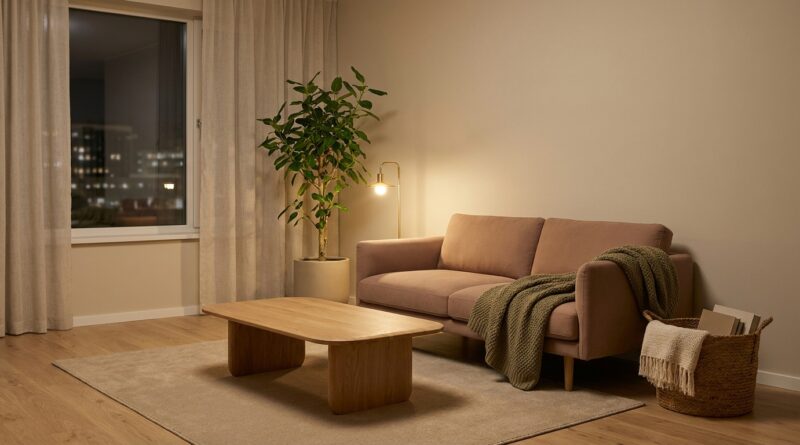
The 5-Object Living Room: A Minimalist Way To Turn Your Evenings Into Deep Recovery Time
You know that feeling when you finally stop working, walk into the living room, and somehow feel more tired instead of less? The coffee table is crowded. The TV is still begging you to keep scrolling. Chargers snake across the room. Even the couch feels like a place to slump, not recover. That low-grade visual noise matters more than most people think. Your brain does not see a cozy room. It sees unfinished business.
A minimalist living room for relaxation and productivity is not about making your home look like a furniture showroom. It is about giving your evening fewer things to process. If your space asks less from your attention, your body has a better shot at calming down. The good news is you do not need a full makeover. You can build a deep-recovery setup with just five intentional objects, chosen to support rest, focus, and better sleep. Think of it as turning your living room into a nightly reset button, one that works quietly in the background while you read, talk, stretch, or simply breathe for a minute.
⚡ In a Hurry? Key Takeaways
- A minimalist living room for relaxation and productivity works best when it contains only a few objects that actively support calm, comfort, and light evening routines.
- Start with five basics: comfortable seating, warm lighting, one natural element, one soft texture, and one intentional surface for a single calming activity.
- You do not need to throw everything out. Remove visual clutter first, then add back only what helps you rest better and feel clearer the next day.
Why your living room may be draining you
Most people blame themselves for not relaxing well. They say they are bad at winding down. They think they need better discipline, a stricter bedtime, or a fancy wellness routine.
Sometimes the problem is simpler. The room itself is noisy.
Not loud. Busy.
Every object competes a little for your attention. A stack of mail says, “Deal with me.” A game controller says, “Stay up a bit longer.” A TV home screen full of apps says, “Keep going.” Multiply that by shelves, cords, remote controls, unopened packages, and random decor, and your brain never really gets the signal that the day is over.
That is why warm, organic minimalism is connecting with so many people right now. It does not just look nice in photos. It lowers the number of decisions your brain has to make at the exact time you should be recovering.
The five-object framework
If you want a minimalist living room for relaxation and productivity, give the room a narrow job description. It is not a storage unit, office overflow zone, and second screen cave. It is your transition space. A place that helps your mind step down from work mode.
Here are the five objects that do the heavy lifting.
1. One truly comfortable seat
This can be a couch, lounge chair, or loveseat. The key word is truly. If your seating makes you fold into a tired heap, it is not helping recovery. You want support, not collapse.
Look for something that lets your shoulders drop and your feet rest naturally. Neutral fabric, soft texture, and simple lines help. So does leaving breathing room around it. If the seat is surrounded by baskets, side piles, and gadgets, your body may be resting while your eyes keep working.
If possible, make this the visual anchor of the room. One main seat is better than several mediocre ones.
2. One warm light source
Overhead lighting is often the enemy of evening calm. It is useful, but not restful. A single floor lamp or table lamp with a warm bulb can change the whole feel of the room in about ten seconds.
Think soft amber, not bright white. You want the light level to tell your nervous system, “We are done for today.”
This is one of the cheapest upgrades on the list, and often the most effective. If your evenings feel jagged, lighting is a smart place to start.
3. One natural element
This is where the “warm, organic” part comes in. Add one object from nature, or one object made from natural material. A small plant. A wooden stool. A stone bowl. A linen shade. A ceramic vase.
You do not need to turn the room into a greenhouse. One natural element is enough to soften the space and make it feel less synthetic, less transactional, less like an extension of your workday.
If you choose a plant, pick one that is easy to keep alive. The point is calm, not guilt.
4. One soft layer
Every recovery room needs a signal of comfort. Usually this is a throw blanket or one good rug. Something tactile. Something that makes the room feel settled.
Soft texture matters because it changes how a space feels without adding visual chaos. A wool throw in a calm color does more for relaxation than five decorative objects ever will.
Keep it simple. One blanket folded neatly is soothing. Four blankets tossed around the room start to look like laundry with better PR.
5. One intentional surface
This is the most overlooked object in the room. You need one clear surface that supports a calming activity. Maybe that is a side table for tea and a book. Maybe it is a coffee table with only a candle and a journal. Maybe it is a small stool near your chair where your phone does not belong.
The point is to give your evening a home base.
If every surface is already covered, your brain assumes the room is still in use for work, storage, or chores. A clear, intentional surface says the opposite. It says this space is ready.
What does not make the cut
This is where many living rooms go sideways. People add “cozy” items without subtracting the stress-producing ones.
For this framework to work, try removing or relocating these common attention traps:
- Extra remotes and visible charging cables
- Open storage full of mixed items
- Stacks of paperwork or delivery boxes
- Decor that is purely filler
- Exercise gear that never leaves the corner
- A TV interface left on as background visual noise
You do not have to live without technology. Just stop letting it dominate the room when the day is done.
How this helps both relaxation and next-day productivity
This is the part people miss. A calmer evening space is not just about sleepiness or aesthetics. It affects how your attention works the next morning.
When your brain gets a cleaner runway at night, it spends less time staying alert to unfinished inputs. That can mean better sleep onset, less doom-scrolling, and fewer “I never really switched off” evenings.
The next day, the payoff is subtle but real. You feel less mentally sticky. It is easier to start work. Easier to read. Easier to finish a thought without grabbing your phone every six minutes.
That is why a minimalist living room for relaxation and productivity is not a contradiction. Relaxation is part of productivity. Recovery is not wasted time. It is maintenance.
A one-weekend reset plan
You do not need a designer. You need two bags, one donation box, and about half a day.
Step 1: Clear every visible surface
Coffee table, side table, TV console, shelf tops. Empty them first. Do not edit as you go. Get the room visually quiet.
Step 2: Keep only the five objects that serve recovery
Bring back the seating, lamp, natural element, soft layer, and intentional surface setup. Everything else has to earn its place.
Step 3: Hide the functional mess
Use a small basket, drawer, or cabinet for remotes, chargers, and daily clutter. The goal is not perfection. It is lower visual demand.
Step 4: Fix the TV problem
If your television is in the room, make it less dominant. Turn off autoplay. Use art mode or a blank screen when it is not in use. Do not leave menus glowing in the background.
Step 5: Test the room at night
After dinner, sit there for ten minutes with no chores. No second screen. No folding laundry. Just notice whether the room helps you exhale or keeps nudging you to do more.
If it still feels busy, remove one more thing.
Small choices that make a big difference
You do not need to spend much money to make this work. In fact, spending less often helps, because it forces you to choose more carefully.
Here are a few smart rules:
- Pick matte finishes over shiny ones when possible
- Use earthy or neutral colors instead of high-contrast patterns
- Choose closed storage if you tend to accumulate small items
- Keep decor low and sparse so sightlines stay open
- Make the most calming object in the room the first thing you see
If you live with family, roommates, or kids
This framework still works. It just needs to be realistic.
You are not aiming for a museum. You are creating a nightly landing zone.
Maybe the toys go into one basket after 8 p.m. Maybe the room has a “lights low, screens low” setting in the evening. Maybe one corner becomes the calm corner, even if the rest of life is a bit messier.
The five-object idea is flexible. What matters is that the room has a clear identity at night. It should feel different from the workday. Different from the kitchen. Different from the endless stream of inputs that fill the rest of your time.
At a Glance: Comparison
| Feature/Aspect | Details | Verdict |
|---|---|---|
| Traditional busy living room | Multiple decor items, visible tech, cluttered surfaces, bright overhead lighting | Looks lived-in, but often keeps the brain alert |
| Five-object recovery room | Comfortable seat, warm lamp, natural material, soft texture, one clear activity surface | Best balance of calm, comfort, and easy upkeep |
| Full design overhaul | New furniture, major spending, total room redesign | Can work well, but not necessary for better evenings |
Conclusion
You do not need a complicated night routine to feel more restored. Sometimes you just need a room that stops asking things from you. That is why warm, organic minimalism is catching on. Fewer objects, more natural materials, and spaces that calm the brain instead of poking it all evening. Plenty of people have already optimized their phones and desks, yet they still wake up tired because their home never helped their stress response switch off. This five-object framework gives you a practical way to fix that in one weekend. Start small. Clear a surface. Soften the light. Keep one good seat. Add one natural touch. Let the room do less, so you can finally do less too. If your evenings become a little quieter, your sleep, attention, and next-day productivity often get better without another habit stack to manage.