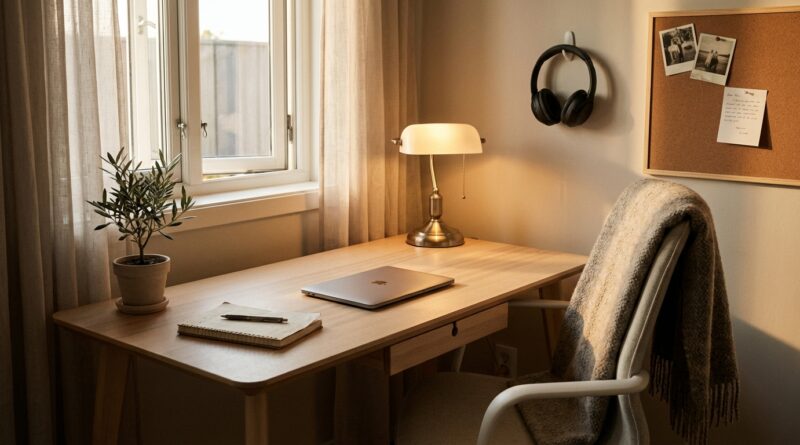
The 5‑Sense Desk: A Minimalist Workspace Ritual That Calms Your Nervous System And Doubles Your Focus
Your desk can be perfectly functional and still wear you out. That is the annoying part. The monitor works, the chair is acceptable, the lamp turns on, and yet after 20 minutes you feel scattered, tense, or weirdly tired. So you start tweaking apps, trying new to-do systems, or buying another gadget. Meanwhile, the real problem is sitting right in front of you. Your workspace is feeding your nervous system a steady stream of tiny stress signals through light, sound, posture, temperature, and visual clutter. That adds up fast. A good minimalist workspace setup for better focus is not about making your desk look like a showroom. It is about making it feel safe, clear, and easy for your brain to use. Once you fix that, focus stops feeling like a fight. It starts feeling like something your space quietly supports.
⚡ In a Hurry? Key Takeaways
- A minimalist workspace setup for better focus works best when you calm all five senses, not just clear the desktop.
- Start with one small reset: softer light, lower noise, better chair support, a cleaner visual field, and one grounding scent or drink.
- You do not need expensive gear. Small sensory changes can improve focus, comfort, and even sleep later that night.
Why your desk feels “off” even when nothing is technically wrong
Most people think distraction is a willpower problem. Sometimes it is. But often it is a body problem first.
Harsh overhead light makes you squint. A chair edge presses into your legs. Background office chatter keeps part of your brain on alert. A pile of cables and papers sits in your peripheral vision like an open browser tab in real life. None of these things seem dramatic on their own. Together, they keep your system slightly braced.
That low-grade stress is expensive. It chips away at attention, patience, and stamina. By midafternoon, you are not lazy. You are overloaded.
This is why a minimalist workspace setup for better focus should be built around sensory friction. The goal is simple. Remove the little irritations your body keeps noticing, even when your mind is trying to ignore them.
The 5-sense desk ritual
Think of your desk like a control room. Each sense either tells your body “you are okay, stay on task” or “something is off, stay alert.” Your job is to tip the balance toward calm.
1. Sight: reduce visual static
Vision usually gets hit first. If your desk is visually noisy, your attention gets pulled in ten directions before you even begin.
Start here:
- Keep only the items for the current task in your direct line of sight.
- Move chargers, unopened mail, and random accessories into a drawer or box.
- Use a softer, warm desk lamp if overhead lighting feels sharp.
- Place your screen so you are not staring into glare from a window.
- Choose one calming object, like a plant, notebook, or simple photo. One is enough.
Minimalism helps because your brain has fewer things to keep half-processing. This is not about sterile design. It is about visual relief.
2. Sound: give your brain fewer threats to track
Sound is sneaky. Even low-level noise can keep your nervous system busy. A barking dog, HVAC hum, hallway footsteps, Slack pings. Your brain keeps checking, “Do I need to react to that?”
Try this:
- Turn off nonessential alerts during focus blocks.
- Use soft earplugs, closed-back headphones, or steady background sound.
- If music helps, pick instrumental tracks you already know well.
- If silence feels too sharp, try rainfall, brown noise, or a fan.
The best sound setup is the one that feels boring in a good way. You want sound that disappears, not sound that performs.
3. Touch: fix pressure points and posture before they drain you
If your body is uncomfortable, your brain will not settle. You may still get work done, but it will cost more energy than it should.
Check these basics:
- Your feet should rest flat on the floor or on a footrest.
- Your forearms should feel supported, not lifted and tense.
- Your lower back should have some support, even if it is just a small cushion.
- Your keyboard and mouse should not force your shoulders upward.
- Keep a layer nearby if your workspace runs cold.
You do not need a fancy ergonomic throne. A folded towel behind the lower back, a box under the feet, or a better mouse position can make a bigger difference than people expect.
4. Smell: use scent lightly, or not at all
Smell has a direct line to memory and mood. That can help, but this is the place where less is more.
If scent works for you, keep it subtle:
- A cup of tea or coffee can be enough.
- A very light essential oil nearby, not blasted into the room.
- Fresh air from a cracked window if possible.
If you work in a shared space, skip added fragrance unless you know it will not bother anyone. The point is not to perfume the desk. The point is to give the space a small cue of calm and consistency.
5. Taste: create a simple grounding cue
Taste sounds odd in a desk setup, but it matters because rituals matter. A repeated sip of water, tea, or coffee can act like a small “we are starting now” signal for the brain.
Keep it simple:
- Put a glass or bottle of water within reach.
- Use one focus drink for work sessions, like peppermint tea or plain coffee.
- Avoid turning the desk into a snack station that keeps interrupting you.
The goal is not grazing. It is grounding.
How to do the reset in under 3 minutes
You do not need a Sunday afternoon makeover. You need a repeatable start-up routine.
Here is a practical version:
- Clear one arm’s length of desk space.
- Fix the light. Turn off harsh overheads or switch on a warmer lamp.
- Set the sound. Headphones on, alerts off, background noise chosen.
- Adjust the chair, feet, and screen height.
- Place water or tea on the desk.
- Take one slow breath before opening anything.
If you want to pair this with a stronger work start, the routine fits nicely with The 5‑Ritual Workday: A Minimalist Pre‑Game That Drops You Into Flow In Under 3 Minutes. The sensory reset handles the room. That ritual handles your attention.
What to buy, and what to skip
This is where people often go sideways. They think “calm workspace” means shopping list. Usually it means editing list.
Worth considering
- A warm, adjustable desk lamp
- A small cushion or lumbar support
- Headphones or simple earplugs
- A monitor riser or stack of books
- A tray or drawer organizer to hide loose clutter
Usually not the first fix
- RGB lighting
- Big desk accessories you now have to manage
- Strong diffusers in small spaces
- Multiple productivity gadgets competing for your attention
If a product adds one more decision, cable, or visual object, it may be hurting the exact thing you want to improve.
Small spaces and noisy offices still count
You do not need a home office with oak shelves and perfect daylight. Most people are working from a corner of a bedroom, a kitchen table, or a shared office where somebody is always microwaving fish at the wrong time.
You can still make the space feel better.
In a tiny apartment, use zones. A lamp that only turns on during work can create a mental border. In an office, headphones and one desktop organizer can cut a surprising amount of sensory drag. If your setup is temporary, focus on portable changes: lighting, sound, posture, and one clean visual area.
Calm is often more about consistency than square footage.
How to tell if your setup is working
Do not judge it by aesthetics alone. Judge it by how your body feels after an hour.
- Are your shoulders less tense?
- Do you fidget less?
- Are you switching tasks less often?
- Do you feel less drained at the end of a work block?
- Are evenings a little less wired?
Those are the real metrics. Focus is not just “How much did I do?” It is also “How fried did I get doing it?”
At a Glance: Comparison
| Feature/Aspect | Details | Verdict |
|---|---|---|
| Lighting | Warm, indirect light reduces eye strain better than harsh overhead lighting. | High impact, low cost fix |
| Noise control | Fewer alerts and steadier background sound help the brain stop scanning for interruptions. | Essential for deep focus |
| Physical comfort | Better chair support, screen height, and foot position lower physical stress during work. | Often more important than new software tools |
Conclusion
Most people are attacking productivity with more tools, more tabs, and more goals at the exact moment the real bottleneck is a fried nervous system. That is why the 5-sense desk works. It does not ask you to become a different person. It asks you to make your environment easier for a human body to exist in. Science has been pointing this way for years, and the rise of wellness-focused, human-centered spaces is finally catching up. Small, deliberate changes to light, sound, and physical comfort really can improve energy, focus, and even sleep later on. So if your desk “works” but never feels calm, do not start with another app. Start with your senses. A simple five-sense reset can turn almost any desk, in any cramped apartment or noisy office, into something better: a calm little control room instead of a stress amplifier.