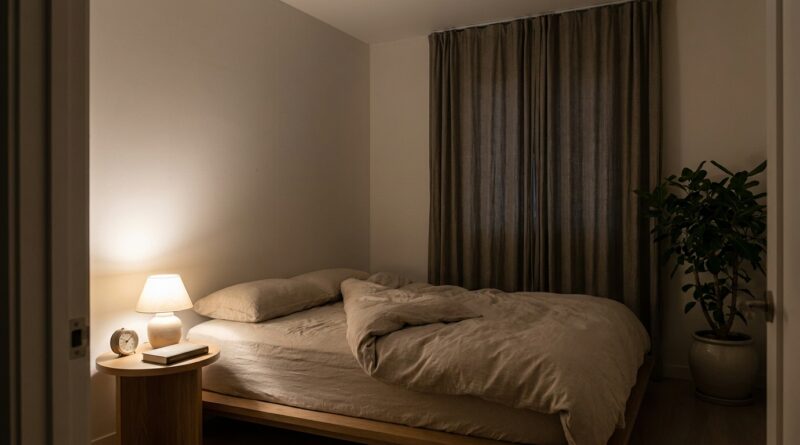
The 5-Rule Bedroom: A Minimalist Night Sanctuary To Kill Doomscrolling For Good
You know the feeling. You are tired enough to yawn, but not tired enough to stop scrolling. One more headline becomes twelve. One video becomes a blur of noise. Suddenly it is 12:47, your eyes feel dry, your brain feels loud, and the room that should help you sleep feels more like a tiny control center for stress. That is not a personal failure. It is a design problem. If your bedroom also works as a phone booth, office, TV lounge and breaking-news bunker, your brain never gets the memo that the day is over. The fix is not another app, a fancy lamp, or a heroic two-hour routine you will quit by Thursday. It is simpler than that. If you want to know how to stop bedtime doomscrolling with a minimalist bedroom, start by giving the room a few clear rules. Not harsh rules. Helpful ones. Think of them as guardrails for sleep.
⚡ In a Hurry? Key Takeaways
- Your bedroom should do three things well: sleep, intimacy, and calm. Everything else makes bedtime doomscrolling easier.
- Use five simple rules: remove the scroll trigger, cut visual clutter, dim the room, replace the phone ritual, and make the bed area screen-free.
- You do not need to buy anything. Most people can start tonight by moving one charger, clearing one surface, and setting one rule for where the phone sleeps.
The real problem is not your willpower
Most advice about late-night scrolling assumes you just need more discipline. That is like telling someone to eat less junk food while leaving a bowl of chips on their pillow.
Your bedroom shapes your behavior. If the phone is charging beside your head, if notifications are one thumb-tap away, if the room is full of unfinished tasks, laundry piles and glowing screens, your brain stays on alert. It keeps sampling. Checking. Searching.
That is why a minimalist bedroom works so well. Minimalism here does not mean sterile, expensive, or beige for the sake of beige. It means fewer cues that invite you to stay mentally awake.
The 5-rule bedroom
Rule 1. The phone does not sleep in bed with you
This is the big one. If you change only one thing, change this.
Your phone should charge outside arm’s reach. Better yet, outside the bedroom. If that is not realistic, put it across the room on a dresser. Not on the mattress. Not under the pillow. Not on the nightstand where your half-awake brain can grab it before you are fully conscious.
Why it works is simple. Doomscrolling loves convenience. Add even a little friction and the habit weakens. You are not trying to become a monk. You are just making the bad habit slightly more annoying than the good one.
If you use your phone as an alarm, that is fine. Place it far enough away that you have to stand up to turn it off. A cheap alarm clock is nice, but not required.
Rule 2. Clear every surface you can see from bed
Look around from where you sleep. What can you see? Bills. Chargers. Laundry. Work bag. Snack wrappers. A blinking router. A half-finished to-do list.
None of that is neutral. Visual clutter is mental clutter. It keeps the day open in your head.
Try this simple filter. If an item does not help with sleep, calm, or tomorrow morning’s basics, it does not need to be visible in the bedroom.
Keep the room boring in the best possible way. A lamp. A book. A glass of water. Maybe one photo or one plant if it genuinely makes the room feel softer. That is enough.
Rule 3. Light should tell your brain the truth
At 11 p.m., many bedrooms still look like 3 p.m. Overhead lights are bright. Phone screens are brighter. TVs flash like miniature suns.
Your body uses light as a timing signal. Bright light says stay alert. Dim light says slow down.
So make evening lighting dumb and gentle. Use a warm bedside lamp if you have one. Turn off the harsh ceiling light earlier than you normally would. Lower screen brightness if you absolutely must use a device. Better still, stop using it in bed.
You do not need a smart-home setup. You need less glare.
Rule 4. Replace the scroll with a tiny ritual
People do not just scroll because they are addicted to news or memes. They scroll because it fills the awkward gap between busy and asleep.
If you remove the phone without replacing the ritual, your brain will protest.
Give it something small and repeatable instead. Read two pages of a book. Stretch for three minutes. Write down tomorrow’s top task on a sticky note. Put on calm music with a timer. Sip water. Breathe slowly for one minute.
The ritual should be short enough that you do it even when you are tired, grumpy, or not feeling very wellness-minded.
This is the whole point. Your bedtime routine should survive real life.
Rule 5. The bed is a screen-free zone
This rule sounds strict, but it is powerful. Once you get into bed, the day is done. No email. No social feeds. No news. No videos “just to unwind” that somehow wind you up.
Your brain learns by repetition. If bed equals content consumption, it stays ready for content. If bed equals sleep, your mind starts to downshift faster.
There will be nights when you slip. That is normal. The goal is not perfection. The goal is making your default better than it is now.
What this looks like in a normal home
Let us make it practical.
A minimalist night sanctuary does not require a redesign show budget. It might look like this:
- Phone charging on a dresser or in the hallway
- Only one or two items on the nightstand
- No laptop bag on the floor beside the bed
- One warm light on, overhead light off
- A paperback or notebook where the phone used to be
- No TV remote on the pillow like it belongs there
That is it. Small changes, strong signal.
Why minimalism helps more than another productivity hack
Many sleep and focus tips start after the damage is already done. They tell you what app to install, what timer to use, or what hack to stack on top of a chaotic room.
But the bedroom is the root of the problem for a lot of people. If it behaves like a second screen, your evenings get chopped into tiny bits of attention. You wake up dull, not restored. Then the next day feels harder, so you seek more numbing at night. Round and round it goes.
A minimalist bedroom breaks that loop by changing the environment first. That is often easier than trying to out-argue your own tired brain at midnight.
If you live with a partner, roommate, or kids
You do not need everyone to become a minimalist philosopher overnight.
Start with the rules you control. Your side of the bed. Your charging spot. Your nightstand. Your last 15 minutes before sleep.
If a partner likes TV in bed, aim for a compromise. Maybe the screen goes off 30 minutes earlier. Maybe headphones are used elsewhere before bed. Maybe the bedroom becomes a no-news zone, even if it is not a no-screen zone yet.
Progress counts.
The one-night reset you can do tonight
If you want a fast start, do this in ten minutes.
- Move your phone charger away from the bed.
- Clear your nightstand until only the essentials remain.
- Take obvious work items out of the bedroom.
- Choose one replacement ritual, book, notebook, stretching, or quiet music.
- Say the rule out loud: once I am in bed, I am done with screens.
That is enough to begin. You can refine later. First, make the room less tempting.
What if doomscrolling is tied to anxiety?
This matters. Sometimes people scroll because they are avoiding silence. Silence can bring up stress, loneliness, or the feeling that they are not ready for tomorrow.
If that sounds familiar, be gentle with yourself. The bedroom rules still help, but they are not a cure-all. If bedtime regularly fills you with dread, racing thoughts, or panic, it may help to talk with a therapist or doctor. Sleep problems can be emotional, medical, or both.
Still, changing the room can lower the nightly noise enough for you to notice what is really going on. That alone is useful.
At a Glance: Comparison
| Feature/Aspect | Details | Verdict |
|---|---|---|
| Phone placement | In bed or on the nightstand keeps scrolling effortless. Across the room or outside the bedroom adds friction. | Move it away first. Biggest payoff for the least effort. |
| Bedroom setup | Cluttered rooms keep your brain on task mode. Minimal surfaces signal rest and closure. | Less visible stuff usually means less mental static. |
| Bedtime habit | Scrolling fills the gap before sleep but often delays it. A tiny ritual gives your mind a calmer runway. | Replace, do not just remove. Habits need a substitute. |
Conclusion
You do not need a perfect bedroom to sleep better. You need a room that stops working against you. Right now a lot of people are drowning in bad news, blue light, and half-slept nights, and most productivity advice misses the real issue. Their bedroom has quietly turned into a second screen. These five rules give you a cleaner fix. Remove the trigger. Cut the clutter. Dim the light. Swap the ritual. Keep the bed screen-free. That is a small redesign with a big effect on mood, focus, and energy. No new app. No expensive gadget. No 19-step evening routine. Just a few deliberate constraints that make rest easier. Start tonight with one rule if that is all you can manage. Your brain does not need more content at midnight. It needs a room that lets it power down.