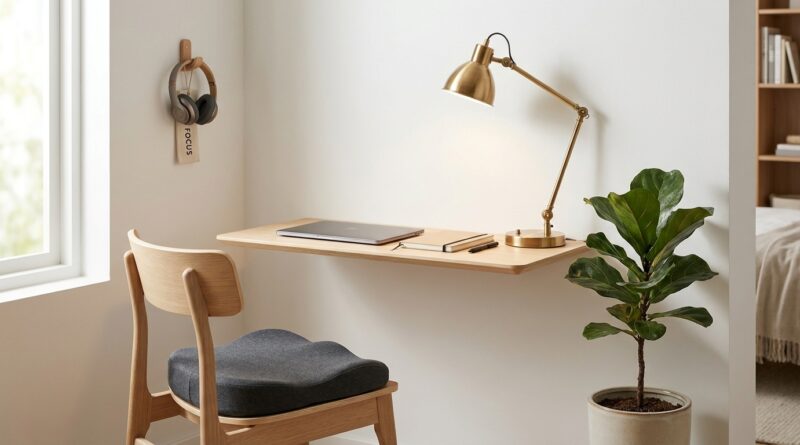
The 5‑Pillar One‑Corner Life Upgrade: A Minimalist Way To Turn A Single Spot Into Your Daily Reset Button
You do not need a spare room, a designer desk or some magical morning routine to feel less scattered. If your days currently happen from the couch, the kitchen chair or whatever surface is free, the problem is not that you are lazy or bad at focus. It is that your brain has no clear place to switch into work mode, then back out again. That gets exhausting fast. The good news is that a minimalist productivity corner setup can do a lot more than most people think. One small, repeatable spot can become your focus zone, your reset zone and your “I know what to do next” signal, all without buying a pile of gear. The trick is to build that corner around a few simple pillars so it works on busy days, low-energy days and noisy-house days too. Think less makeover, more reliable landing pad.
⚡ In a Hurry? Key Takeaways
- A good minimalist productivity corner setup needs one dependable spot and five simple pillars, not a full home office.
- Start with a chair, a surface, better light, a small reset item and a strict “only essentials live here” rule.
- Keep it safe and sustainable by using what you already own first, checking posture and avoiding clutter disguised as productivity gear.
Why one corner matters more than a whole room
People often assume focus comes from square footage. It usually does not. Focus comes from cues.
When you sit in the same clear spot each day, your brain starts to connect that place with a specific job. Sit here, open notebook, start. That is powerful because it removes decision fatigue. You are not scanning the room, shifting piles of laundry or wondering where to plug in your laptop.
This is why so many workspace conversations keep circling back to the same idea. People do not need more stuff. They need one spot that works every time.
If you want to go deeper on the work side of this idea, The 5‑Pillar Quiet Zone Workday: A Minimalist Way To Turn One Corner Into Your Daily Focus Engine is a useful companion read. It lines up nicely with the same minimalist thinking.
The 5 pillars of a one-corner life upgrade
1. Location: Pick the most dependable spot, not the prettiest one
The best corner is the one you can actually return to every day. That might be the end of the dining table, a bedroom nook, a windowside stool or one side of a shared desk.
Ask three quick questions:
- Can I sit here at roughly the same time each day?
- Can I keep at least a few items here without moving them constantly?
- Is this spot less distracting than my bed or couch?
If the answer is yes, that is enough. Do not wait for perfect light, perfect silence or perfect furniture.
2. Surface: Give yourself a clean landing zone
Your corner needs one small surface that says, “this is where the next task starts.” A desk is nice, but not required. A slim side table, a wall-mounted shelf, a tray on a sturdy table or even a cleared section of a counter can work.
The rule is simple. Only the items needed for your current session belong there.
For most people, that means:
- Laptop or notebook
- Water or tea
- Pen
- One charger
Everything else is visual noise. Visual noise quietly drains attention.
3. Signal: Add one cue that tells your brain what mode you are in
This is the part people skip, and it matters. Your corner should have one repeatable cue that marks the shift into focus or reset mode.
That cue could be:
- A small lamp you turn on only when you begin
- A folded notebook you open first
- A timer set for 25 minutes
- A cushion placed on the chair only during your focus block
It sounds almost too simple. It works because routines stick better when a physical action starts them.
4. Comfort: Make it easy on your body, even if the setup is basic
You do not need an expensive ergonomic chair, but you do need basic comfort. If your back, neck or wrists are miserable, your corner will never become a place you trust.
Start with small fixes:
- Raise your screen with books if you are looking down too much
- Use a pillow or folded towel for lower-back support
- Keep feet flat on the floor or on a small box
- Use softer, warmer light if overhead lighting feels harsh
Minimalist does not mean uncomfortable. It means intentional.
5. Reset: Include one item that helps you come down, not just gear that ramps you up
This is what turns the corner into more than a work spot. It becomes a daily reset button.
Add one simple item that helps you pause between tasks or after a hard stretch. Think of it as a bridge back to yourself.
Good options include:
- A small plant
- A favorite mug
- A paper journal
- A candle, if safe for your space
- A short printed breathing prompt
You are not building a spa. You are giving your nervous system a clear message that this spot is calm, predictable and useful.
How to build your minimalist productivity corner setup in 15 minutes
Step 1: Clear a space the size of a backpack
That is enough. You do not need a dramatic before-and-after photo. Just remove anything that does not support focus or rest.
Step 2: Choose your “daily three” items
Pick the three things you use every time. For example, laptop, notebook and water bottle. Leave those ready if you can.
Step 3: Fix the light
If possible, face a window or place a lamp slightly to the side. Good light reduces strain and makes the corner feel more inviting.
Step 4: Create a start cue
Turn on a lamp. Put your phone face down in a drawer. Start a timer. Keep it consistent.
Step 5: Create an end cue
Close the notebook. Wipe the surface. Put the pen in the same place. This tiny shutdown ritual helps stop work from leaking into the rest of your day.
What to avoid
Do not turn the corner into a storage dump
A useful corner is not the place for unopened mail, random cables and six half-used notebooks. The more mixed-purpose it becomes, the less effective it is.
Do not buy gear before testing the habit
Try the setup with what you already own for a week. If it works, then decide whether anything actually needs upgrading.
Do not chase aesthetics over function
Yes, a beautiful setup can feel motivating. But if the chair is painful and the surface is too small, the look will not save it.
Small-space versions that actually work
For studio apartments
Use a narrow table or cart against one wall. A small lamp and tray can help mark the area without taking over the room.
For shared homes
Use portable boundaries. A basket with your essentials, a folding lap desk or even a dedicated seat can create enough separation to feel intentional.
For bedroom workers
If you must work in the bedroom, avoid sitting on the bed. Face away from it if you can. Even a tiny chair-and-crate setup is better than mixing work with where you sleep.
How this corner becomes your reset button
The real win is not just getting more done. It is reducing the static in your day.
When one spot always means “begin here” or “breathe here,” you stop wasting energy rebuilding your focus from scratch. You also get a place to land when life feels loud. One page of notes. One cup of tea. Ten quiet minutes. That counts.
A good minimalist productivity corner setup is not about pretending your home is perfectly calm. It is about making one calm patch that is yours.
At a Glance: Comparison
| Feature/Aspect | Details | Verdict |
|---|---|---|
| Space needed | A corner, chair and small surface are enough for most people. | High impact with very little room. |
| Cost | Can be built mostly from items you already own, then improved slowly if needed. | Best to start cheap and prove the habit first. |
| Daily benefit | Creates clear focus cues, less visual clutter and an easier mental reset. | More useful than another random gadget. |
Conclusion
The big idea is refreshingly simple. You do not need more tools. You need one reliable, distraction-free spot you can return to on autopilot. That is why this five-pillar approach matters so much right now. It gives people in shared spaces, tiny apartments and chaotic homes a realistic way to create both a focus pod and a micro-recharge zone without chasing gadgets, moving house or waiting for ideal conditions. Start with one corner. Keep it clear. Make it comfortable. Add one cue to begin and one cue to stop. Done well, this becomes a calm patch in the middle of a noisy day. And that is exactly the kind of minimalist approach to maximum impact that actually sticks.