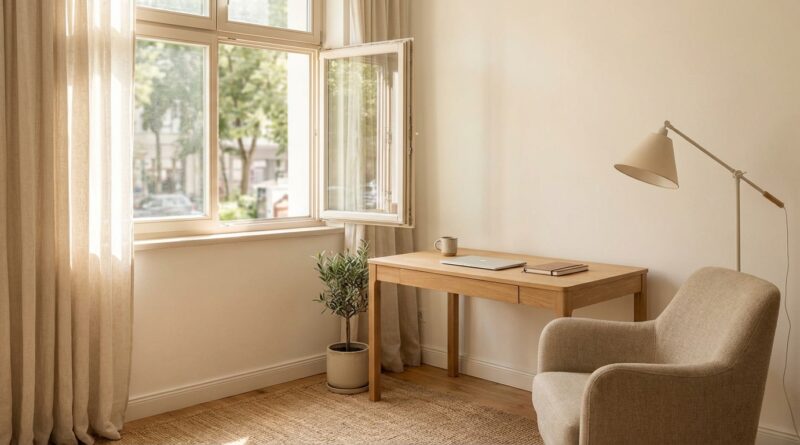
The 5‑Window Day: A Minimalist Space Routine To Quiet Your Home And Sharpen Your Focus
Your brain knows when a room is too busy, even if you keep telling yourself to just focus harder. That is the frustrating part. You can trim your to-do list, silence your phone, and try every neat little habit trick on the internet, yet your home still feels mentally loud. Piles catch your eye. Harsh light keeps you tense. A chair in the wrong place makes work feel like a chore before you even begin. If your space feels like a browser with 27 tabs open, you do not need a full makeover. You need a simpler way to read the room and calm it down. That is where the 5-Window Day comes in. Think of it as a minimalist productivity home environment check you can do in under an hour per room. Instead of buying new gear or setting up another app, you use five “windows” to spot what is draining your energy and fix the obvious stress points fast.
⚡ In a Hurry? Key Takeaways
- The 5-Window Day is a simple room check using light, sound, surfaces, movement, and recovery zones to make your home feel calmer and easier to work in.
- Start with one room and spend 10 to 12 minutes on each “window” instead of trying to redesign everything at once.
- You do not need new tech or expensive furniture. Small layout and sensory fixes often reduce stress faster than another productivity app.
What Is the 5-Window Day?
The idea is simple. You look at one room through five practical lenses, or “windows,” that affect your focus more than most people realize.
Those five windows are:
- Light
- Sound
- Surfaces
- Movement
- Recovery
Most people try to fix their attention by changing themselves. Better routines. Better apps. Better planners. But often the room is the thing doing the interrupting.
A minimalist productivity home environment is not about making your home look empty or cold. It is about making the room ask less of your brain.
Why Your Room Drains You Before Work Even Starts
Your attention gets pulled in tiny ways all day. A stack of unopened mail. A bright overhead light. A charging cable stretched across the floor. A chair facing the TV when you are trying to write. None of these things seem huge on their own.
Together, they create friction.
That friction turns into decision fatigue. Your brain keeps scanning, adjusting, filtering, and ignoring. By the time you sit down to do something important, part of your energy is already gone.
This is why the room matters so much. It quietly sets the cost of concentration.
How to Do a 5-Window Day in Under an Hour
Pick one room. Set a timer for 50 to 60 minutes. Spend about 10 to 12 minutes on each window. Do not aim for perfect. Aim for noticeably calmer.
Window 1: Light
Light changes mood fast. It also changes how alert or tired you feel.
Start by standing in the room at the time you usually use it most. Ask yourself two questions. Is the light helping me do what this room is for? Is anything about it making me squint, slump, or feel flat?
Then make the obvious fixes:
- Open curtains fully if natural light is available.
- Move your desk or chair closer to a window if possible.
- Turn off harsh overhead lighting and use softer lamps for reading or desk work.
- Remove anything blocking daylight, like storage bins, tall clutter, or unused decor.
If one side of the room feels gloomy, do not rush to buy anything. First try rearranging what you already have.
Window 2: Sound
You may think you have “gotten used to” the noise in your home. Sometimes you have. But your nervous system may still be working overtime.
Listen for five minutes without doing anything else. Really listen.
Notice:
- Appliance hum
- Street noise
- Echo from hard surfaces
- TV bleed from another room
- Phone notifications and smart speaker alerts
Now reduce what you can. Shut the door. Add a rug. Move a noisy device away from your work spot. Turn off nonessential alerts. If the room feels echoey, soft items like curtains, cushions, and fabric wall hangings can help absorb sound.
You are not trying to create silence. You are trying to remove the sounds that keep poking your attention.
Window 3: Surfaces
This is where visual noise lives.
Look at every flat surface in the room. Desk. Counter. Side table. Dresser. Shelf edges. If it is visible, your brain is reading it.
Here is the rule. Keep only what supports the main job of the room or genuinely helps you feel settled there.
For example:
- On a work desk, keep the laptop, notebook, pen, lamp, and maybe one calming object.
- In a bedroom, keep the nightstand limited to sleep-friendly items.
- In a living room, clear the “drop zones” that collect random stuff.
You do not need to hide your whole life in boxes. Just stop making every surface compete for attention.
If you want to go a bit deeper on the sensory side of this, The 5‑Sense Focus Reset: How Tiny Sensory Tweaks Make Your Minimalist Day Feel Rich, Not Empty is a smart next read. It pairs well with this approach because a calmer room should still feel human, not sterile.
Window 4: Movement
This one gets overlooked all the time. A room can look tidy and still be annoying to use.
Walk through it like a first-time visitor. Where do you sidestep? What do you reach around? What makes you pause, bend awkwardly, or backtrack?
Fix the path, not just the look.
- Clear walkways.
- Put often-used items where your body naturally reaches.
- Move chargers, bags, baskets, and stools out of traffic areas.
- Position furniture so the room is easy to enter and easy to leave.
Good flow lowers low-grade stress. Bad flow creates dozens of tiny interruptions you barely notice until they are gone.
Window 5: Recovery
Every room needs one small cue that tells your brain, “You can settle here.” That is the recovery window.
This does not mean turning your home into a spa. It means giving each room one calming anchor.
Examples include:
- A chair by a window
- A clear bedside table
- A small plant
- A blanket basket within reach
- A reading lamp that creates a softer evening mood
This is where the rising interest in slow, nature-inspired spaces actually becomes useful. You do not need a trend board. Just add one or two natural, calming elements that make the room easier to exhale in.
A Simple Checklist You Can Use Room by Room
If you like practical systems, here is the short version:
- Light: Can I see clearly and feel alert without strain?
- Sound: What noise here is stealing my focus?
- Surfaces: What visible item does not need to be here?
- Movement: What gets in my way physically?
- Recovery: What in this room helps me feel calm?
Run through those five questions and make only the clearest fixes first. That is enough.
Best Rooms to Start With
If you are feeling mentally fried, do not start with the whole house. Start where you spend the most attention.
Home office or desk corner
This is usually the biggest payoff. Even a few changes here can make work feel lighter.
Bedroom
If your sleep is off, your focus will be off. A calmer bedroom helps the next day before it starts.
Living room
This matters more than people think, especially if it doubles as a work zone, family zone, and scroll-on-the-phone zone.
What Not to Do
There are a few traps worth avoiding.
- Do not buy storage before removing the obvious clutter.
- Do not copy a social media room setup that does not match your real life.
- Do not try to fix every room in one day.
- Do not confuse “minimal” with empty, uncomfortable, or joyless.
The point is not to create a showroom. The point is to make daily life less noisy and more usable.
Why This Works Better Than Another Productivity Hack
Because it cuts friction at the source.
A lot of productivity advice assumes your environment is neutral. It usually is not. It is either helping your focus or taxing it. Once your room stops throwing little demands at you, many other habits get easier without extra effort.
That is what makes this useful. It is low-tech, low-cost, and immediate.
At a Glance: Comparison
| Feature/Aspect | Details | Verdict |
|---|---|---|
| Time needed | About 50 to 60 minutes per room, with 10 to 12 minutes per window | Fast enough to do in one afternoon |
| Cost | Usually free if you start by rearranging, removing, and muting what you already have | High value, low effort |
| Impact on focus | Reduces visual noise, sound interruptions, awkward movement, and sensory stress | Often more helpful than adding another app or habit tracker |
Conclusion
You do not need a smarter routine if your room is quietly working against you. Right now a lot of people are buried in habit stacks, micro-goals, and endless digital fixes while ignoring the one variable they sit inside every day. The room matters. The 5-Window Day gives you a simple, low-effort way to improve a minimalist productivity home environment in less than an hour per room. No new tech. No big learning curve. Just a practical checklist that can reduce stress, cut decision fatigue, and make focused work feel more natural. Start with one space. Fix what your senses keep complaining about. The calm you are looking for may not be in a new system at all. It may be in the chair, the light, the surface, and the path right in front of you.