The 5‑Threshold Rule: A Minimalist Way To Protect Your Best Hours From Modern Life’s Constant Creep
You probably do not need a brand-new productivity system. You need a few better boundaries. Most days are not wrecked by some dramatic crisis. They get chipped away, little by little. One meeting gets added. One quick favor turns into 20 minutes. One bedtime scroll becomes 11:47 p.m. Then you look up and wonder why your best energy went to everyone and everything except the work and people that matter most to you. That frustration is real, and it is exhausting.
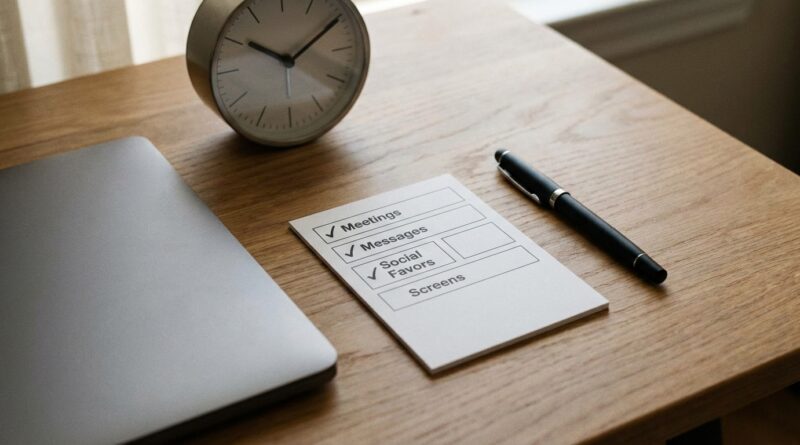
The 5-Threshold Rule is a simple fix for that slow leak. Instead of trying to optimize your whole life, you set five hard stopping points for the areas that tend to creep. Think of them as small gates. When something crosses the line, you pause and decide on purpose instead of drifting along. That is why minimalist productivity thresholds work so well. They cut down on decision fatigue, protect your focus, and make your day feel like it belongs to you again.
⚡ In a Hurry? Key Takeaways
- The 5-Threshold Rule means setting five clear limits for the parts of life most likely to sprawl, like meetings, screens, favors, spending, and bedtime.
- Start small. Pick thresholds you can actually keep this week, then adjust after seven days instead of trying to rebuild your whole routine at once.
- This works because it protects your best hours and lowers decision fatigue, not because it turns you into a robot.
What the 5-Threshold Rule Actually Is
The idea is simple. Choose five areas where modern life keeps pushing a little too far. Then set one threshold for each. A threshold is the point where you stop, check, and decide.
Not drift. Decide.
For example:
- No meetings before 10 a.m.
- No social apps after 9 p.m.
- No saying yes to favors during your focus block.
- No online shopping without a 24-hour wait.
- No work email after dinner.
That is it. You are not building a color-coded life dashboard. You are putting five doors on the hallways where your time keeps escaping.
Why Tiny Oversteps Feel So Draining
Big problems are obvious. Tiny oversteps are sneaky.
They come dressed as reasonable requests. A quick call. A quick reply. A quick errand. A quick peek at your phone. Each one sounds harmless. Together, they eat the exact hours when your brain is sharpest.
This is why people get so frustrated with their days. It is not always laziness or bad planning. Often, it is death by a thousand tiny permissions.
The appeal of minimalist productivity thresholds is that they catch the leak early. You do not wait until you are overwhelmed. You notice the creep at the border.
The Five Best Thresholds to Start With
1. A Meeting Threshold
Meetings are one of the fastest ways to lose a day. Set a number or a time boundary.
Examples:
- No meetings before 10 a.m.
- No more than two meetings in one day.
- No meeting accepted without an agenda.
If your mornings are your best thinking time, protect them like a locked room.
2. A Screen Threshold
Phones are not just distractions. They are frictionless detours. You pick it up for one reason and come back 18 minutes later with no memory of what happened.
Examples:
- No scrolling before breakfast.
- No social media after 9 p.m.
- No phone in the room during deep work.
This one matters because late-night screen creep often steals tomorrow’s energy too.
3. A Favor Threshold
Helpful people often have the biggest time leaks. If you are known as reliable, everyone brings you the “small” stuff.
Examples:
- No same-day favors unless it is urgent.
- No volunteering during work hours.
- No answering non-urgent requests before lunch.
Being kind is good. Being endlessly interruptible is not.
4. A Work Spillover Threshold
Work has a special talent for expanding into every available inch of your life. If you work from home, you know this already.
Examples:
- No email after 6 p.m.
- No laptop reopened after shutdown.
- No “just one more thing” after your end-of-day cutoff.
If work can always continue, your brain never really stops.
5. An Energy Threshold
This is the one people skip, and it may be the most important. Your best hours are not all day. They are a window. Figure out when that window is and stop giving it away.
Examples:
- No admin tasks during 8 to 11 a.m.
- No hard conversations after 8 p.m.
- No commitments on the day you usually hit a wall.
This threshold is less about time management and more about self-respect.
How to Build Your Own 5-Threshold Rule
Step 1. Find the repeat offenders
Look back at the last week. Where did your time go sideways? Do not search for dramatic failures. Look for patterns.
- Too many meetings?
- Too much phone time?
- Too many interruptions?
- Too much work bleeding into night?
- Too many social obligations in your peak hours?
Step 2. Write the threshold as a clear rule
Bad rule: “Use my phone less.”
Better rule: “No Instagram after 9 p.m.”
Bad rule: “Protect my mornings.”
Better rule: “No meetings before 10 a.m., Tuesdays through Thursdays.”
The rule should be so clear that a tired version of you can still follow it.
Step 3. Make the first version almost boring
This is where people mess up. They get inspired and make rules fit for a monastery.
Do not do that.
Set thresholds that feel a little firm, not heroic. You want something you can repeat, not something that makes you feel virtuous for two days and defeated by Friday.
Step 4. Tell the people affected
If your threshold changes how coworkers, friends, or family reach you, say it out loud.
Try simple language:
- “I keep mornings meeting-free so I can focus.”
- “I am offline after 9.”
- “I cannot do that today, but I can look tomorrow.”
You do not need a speech. Just a sentence.
Step 5. Review once a week
After seven days, ask:
- Which threshold helped the most?
- Which one was unrealistic?
- Where did creep still get in?
Then tune the rules. This is a living system, not a purity test.
What This Looks Like in Real Life
Let us say your best mental hours are 8 to 11 a.m., but your mornings keep disappearing. A practical 5-Threshold Rule might look like this:
- No meetings before 10 a.m.
- No checking Slack until after 9 a.m.
- No phone on desk during focus sessions.
- No agreeing to favors before lunch.
- No work after 6:30 p.m.
None of these is dramatic. That is the point. Together, they create a fence around your most valuable time.
And once the fence is there, you stop renegotiating your day every 15 minutes.
Why This Works Better Than a Huge Productivity System
Big systems often fail for one simple reason. They ask too much of you when you are already tired.
The 5-Threshold Rule asks less. It does not require a new app, a complex planner method, or a personality transplant. It just asks you to notice where life keeps creeping in and put a line there.
That is why minimalist productivity thresholds are catching on. People are tired of constant optimizing. They do not want another system to maintain. They want a few clean rules that make the day easier to live.
Mistakes to Avoid
Making thresholds too strict
If your rules snap the first time real life happens, they are too brittle.
Setting thresholds for the wrong things
Do not copy someone else’s list. Your leak points are personal. If meetings are not your issue, do not force a meeting rule just because it sounds productive.
Using thresholds to punish yourself
This is not about becoming harsh or joyless. A threshold is a guardrail, not a scolding voice.
Keeping them in your head
Write them down. Put them where you will see them. Your phone wallpaper, a sticky note, your calendar, anywhere obvious.
At a Glance: Comparison
| Feature/Aspect | Details | Verdict |
|---|---|---|
| Setup effort | Requires choosing only five clear limits instead of building a full planning system. | Low effort, easy to start this week. |
| Daily usefulness | Cuts repeated decisions by creating automatic stop points for meetings, screens, favors, and work sprawl. | High value for busy, tired people. |
| Long-term sustainability | Works best when thresholds are realistic and reviewed weekly, not treated like perfect rules. | Very sustainable if kept simple. |
Conclusion
The best part of the 5-Threshold Rule is that it respects your actual life. It does not ask for a total reset. It asks for five cleaner lines. Right now, the bigger shift in productivity is away from giant systems and toward a few non-negotiable habits that reduce decision fatigue and protect deep work. This approach fits that moment perfectly. It gives you a small, concrete way to stop work sprawl, screen creep, and social obligations from swallowing your week. If you are tired of optimizing everything, good. You may not need more tricks. You may just need better borders.