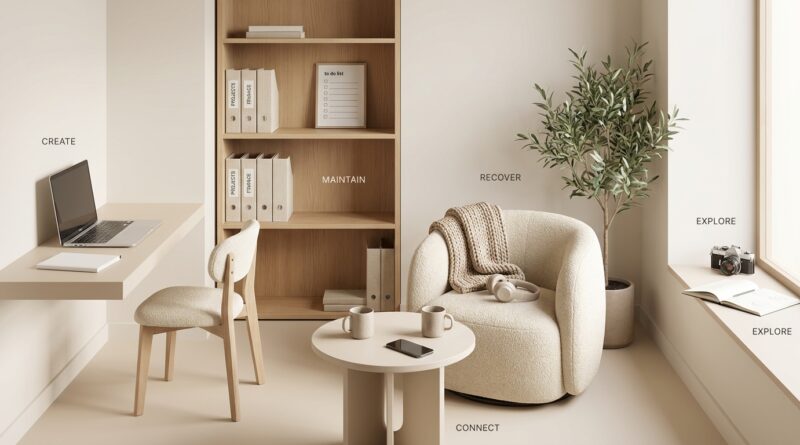
The 5-Mode Day: A Minimalist Framework To Match Your Energy, Not Your To‑Do List
Some days you wake up ready to tackle the world. Other days, answering one email feels like climbing a hill in wet shoes. That is where a lot of productivity advice falls apart. It assumes your brain shows up the same way every morning, every afternoon, every week. Real life does not work like that. You can feel sharp at 9 a.m., foggy by lunch, overstimulated by 3, and somehow wired again at 10 p.m. Then you blame yourself because the perfect routine did not stick. The problem is not that you are lazy or bad at planning. The problem is that your system ignores your actual energy. A better fix is simpler. Match your work to your mode. The 5-Mode Day is a minimalist productivity framework for modern lifestyle chaos. It helps you stop forcing the same to-do list onto five very different versions of yourself.
⚡ In a Hurry? Key Takeaways
- The 5-Mode Day works by matching tasks to your current energy state instead of forcing one fixed routine.
- Start by sorting your tasks into five simple modes: Focus, Admin, Fog, Low, and Reset.
- You do not need an app, planner, or complicated system. A short note on your phone is enough.
Why rigid productivity systems keep failing
A lot of advice sounds good on paper. Wake at 5. Deep work for 90 minutes. Exercise. Journal. Read. Batch tasks. No distractions. It is neat, tidy, and often useless by Tuesday.
Not because the ideas are bad. Because your energy is not a machine.
Modern life is noisy. Meetings cut the day into pieces. Notifications drain attention. Sleep gets weird. Family needs pop up. News cycles fry your brain. Even if you are doing your best, your mental bandwidth changes all day long.
That is why a minimalist productivity framework for modern lifestyle stress has to be flexible. It should bend with your day, not punish you for having one.
What the 5-Mode Day actually is
The 5-Mode Day is a simple way to sort your tasks by the kind of energy they need. Instead of asking, “What should I finish today?” you ask, “What mode am I in right now?”
You are not lowering standards. You are using the right tool for the moment.
Think of it like using the correct setting on a washing machine. You would not run every fabric on the same cycle. Your brain deserves the same common sense.
Mode 1: Focus mode
This is your clear, steady, capable state. Not frantic. Not buzzing. Just mentally available.
Good tasks for Focus mode:
- Writing
- Planning
- Problem-solving
- Important decisions
- Work that needs concentration
Protect this mode when it shows up. Do not waste it clearing your inbox unless the inbox is on fire.
Mode 2: Admin mode
You are functional, but not especially sharp. This is the perfect state for maintenance work.
Good tasks for Admin mode:
- Email replies
- Scheduling
- Forms and paperwork
- Expense logging
- Household logistics
This mode matters more than people think. A lot of life runs on boring little tasks. Admin mode keeps them from eating your best energy.
Mode 3: Fog mode
You are technically awake, but your brain feels wrapped in cotton. This is where many people try to push through high-value work and end up staring at the screen for an hour.
Good tasks for Fog mode:
- Simple sorting
- Light reading
- File cleanup
- Watching tutorials
- Repeating familiar tasks
Fog mode is not failure. It is just not the right time for heavy lifting.
Mode 4: Low mode
This is your flat, drained, maybe emotionally tired state. The goal here is not peak performance. The goal is to keep life moving without digging a deeper hole.
Good tasks for Low mode:
- One tiny must-do task
- Laundry
- Dishwasher reset
- Paying one bill
- Taking a walk
Low mode is where you use the smallest possible version of success. One thing counts.
Mode 5: Reset mode
This one is often missing from productivity systems, which is why people burn out inside them. Reset mode is when your brain is overloaded, overstimulated, or simply done.
Good tasks for Reset mode:
- Step away from the screen
- Drink water
- Sit in silence for 10 minutes
- Do a short walk
- Reduce inputs and recover
Reset is productive when it helps you come back online instead of spiraling into fake work.
How to build your own 5-Mode list
This is the part that makes the system work. You make one master list, then sort tasks by mode. Not by urgency alone. Not by category alone. By the kind of brain they need.
Open a notes app or a sheet of paper and make five headings:
- Focus
- Admin
- Fog
- Low
- Reset
Now take your usual tasks and drop them into the right bucket.
For example:
- Write proposal = Focus
- Reply to vendor = Admin
- Rename files = Fog
- Fold laundry = Low
- Phone on silent and short walk = Reset
That is it. You now have a system that meets you where you are.
Why this feels more realistic than a perfect routine
The best part of the 5-Mode Day is that it removes the moral drama from energy changes. You stop treating a foggy afternoon like a character flaw.
You also stop doing something very common and very frustrating. You stop using high-energy plans to judge low-energy moments.
Those are different conditions. They need different expectations.
If you have also been feeling crowded by demands from every angle, this pairs well with The 5‑Boundary Day: A Minimalist Lifestyle Framework To Protect Your Time, Energy And Attention. Protecting your time is one piece. Matching tasks to your energy is the other.
How to use the framework in real life
Start the day with a mode check, not a fantasy plan
Before you build your day, ask a simple question. What mode am I in right now?
Not what mode should I be in. Not what mode was I in last Tuesday. Just right now.
That one question can save you from making a to-do list you have no chance of following.
Check again after lunch
Your mode often shifts by the afternoon. Many people still plan as if their morning brain lasts all day. It does not.
A two-minute reset at lunch can help. Re-check your mode. Re-pick the task type. Move on.
Keep one “minimum day” version
Some days are not going to be impressive. That is fine. Build a minimum version in advance.
Example:
- One essential work task
- One life admin task
- One reset habit
That is enough for a rough day. Enough matters.
Common mistakes people make with energy-based planning
Using mood as the only signal
You might feel grumpy and still be capable of Focus mode. Or feel cheerful and still be mentally scattered. Mood and capacity overlap, but they are not the same thing.
Turning the five modes into another rigid system
This framework should make life easier, not become another thing to fail at. You do not need color codes, templates, or a dashboard unless you truly enjoy that.
Saving all easy tasks for “later”
Low and Fog modes need a runway. If every task on your list needs full concentration, your system breaks the moment your energy dips.
Who this framework helps most
This approach is especially useful if you:
- Have unpredictable energy
- Work around meetings or family schedules
- Get screen fatigue
- Struggle with all-or-nothing productivity habits
- Feel guilty when routines fall apart
It is also helpful if you are tired of productivity systems that seem built for people with quiet houses, endless willpower, and suspiciously calm mornings.
At a Glance: Comparison
| Feature/Aspect | Details | Verdict |
|---|---|---|
| Core idea | Match tasks to your current energy mode instead of forcing one fixed daily routine. | More realistic for messy, modern days. |
| Setup effort | Requires a one-time task sort into five categories: Focus, Admin, Fog, Low, and Reset. | Very low effort, easy to start today. |
| Best benefit | Reduces guilt, works with energy swings, and helps you stay functional even on off days. | Strong fit for a minimalist lifestyle. |
Conclusion
The 5-Mode Day works because it respects something most productivity advice ignores. You are not the same person every hour of every day. Right now, a lot of people are tired of rigid morning routines and giant habit stacks that collapse the second life gets noisy. This framework offers a calmer option. It works with energy swings, calendar overload, and screen fatigue instead of pretending they do not exist. And that is why it makes such a useful minimalist productivity framework for modern lifestyle chaos. You do not need a new app. You do not need a fancy planner. You just need a short list, a little honesty about your current state, and permission to work with your brain instead of against it.